April 2026 International Perspectives Webinar Series
Pasita
4/21/20262 min read
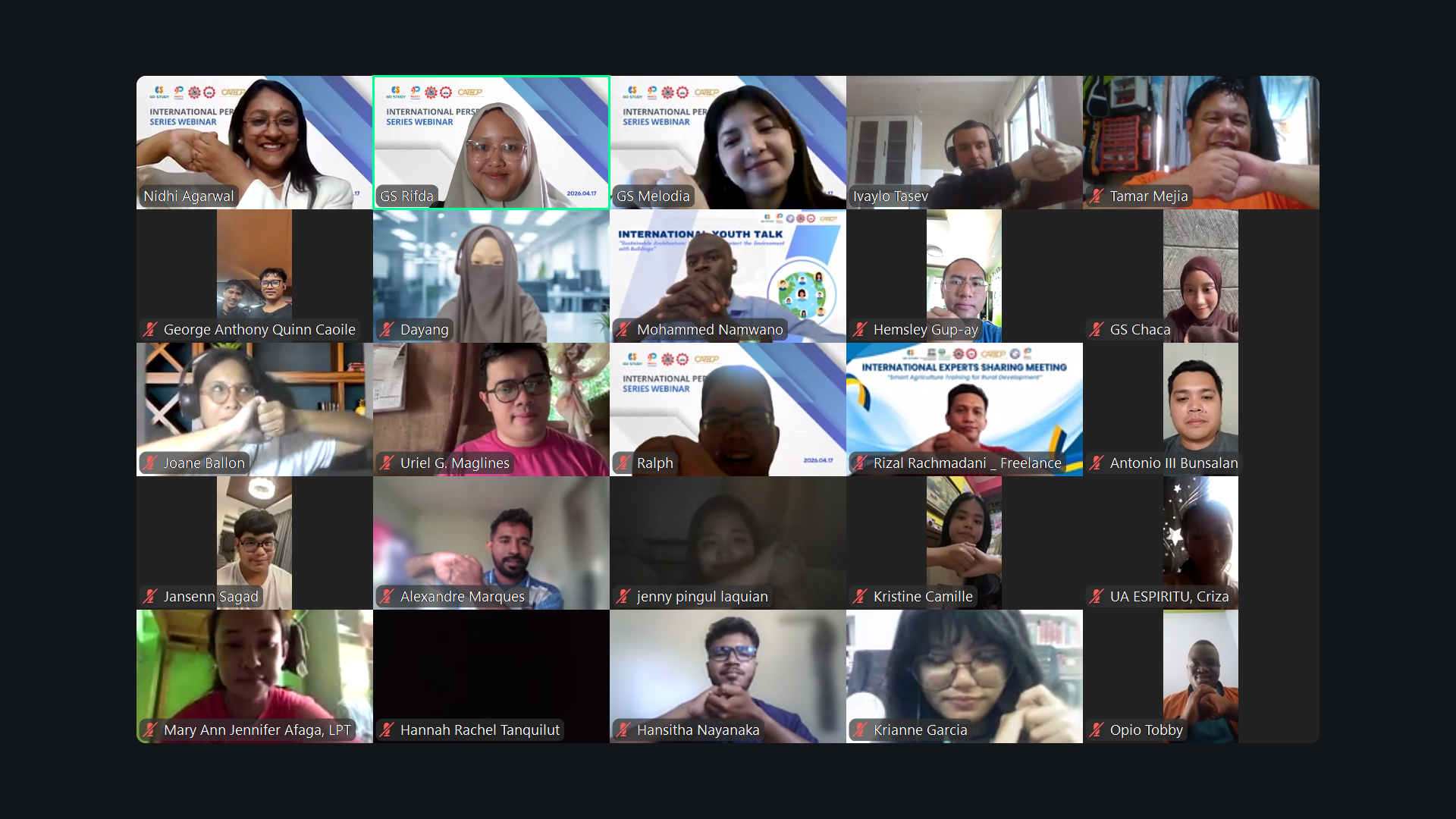
The April sessions of The International Perspectives Webinar Series were successfully conducted. The event was co-organized by the China–ASEAN Technology Education Cooperation Platform (CATECP), the SEAMEO Regional Centre for Technical Education Development (SEAMEO TED), with support from PASITA. This month’s webinars took place on April 3 and 17, 2026, featuring senior experts from Universiti Malaysia Sabah and Lincoln University College.
Webinar 1
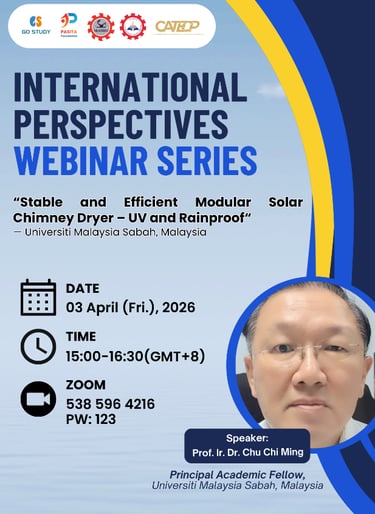
Topic: Stable and Efficient Modular Solar Chimney Dryer – UV and Rainproof
Speaker: Prof. Ir. Dr. Chu Chi Ming, Principal Academic Fellow, Universiti Malaysia Sabah
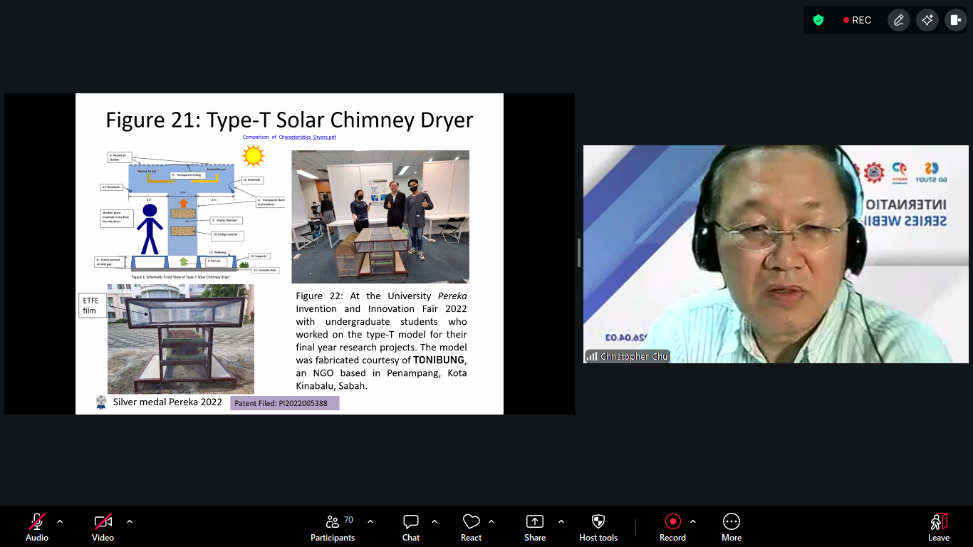
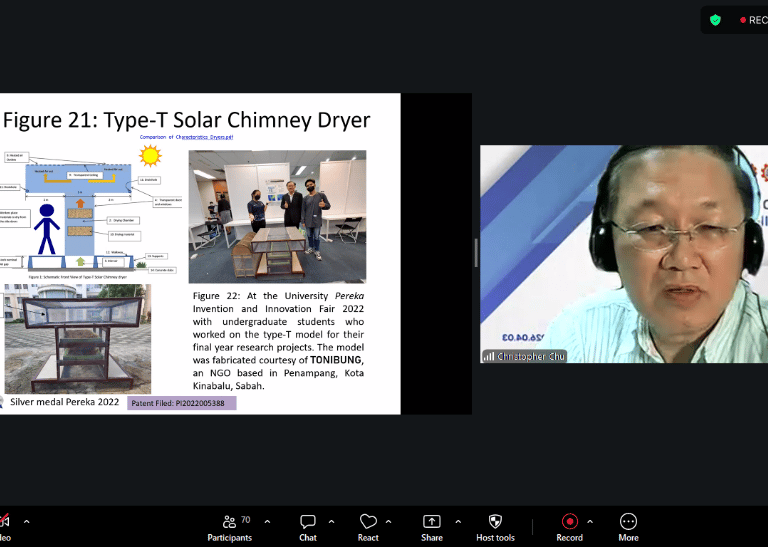
Prof. Chu explained that his presentation focused on developing a stable and efficient modular solar chimney dryer that is UV- and rainproof. He began by explaining how natural draft chimneys work and how they are used in solar dryers, but pointed out a common problem called cold air inflow, which can reduce efficiency by up to 50%. He described his team’s solution to be a simple wire mesh placed at the chimney outlet, which helps to block cold air and stabilize airflow. Prof. Chu shared his experimental and simulation results by showing improved performance, including better drying efficiency and more stable operation. He also presented different dryer designs, starting from early prototypes to improved models, as well as their applications in drying seaweed, agricultural products, and biomass. At last, he concluded that the technology is scalable, cost-effective, and has strong potential for industrial use and other applications.
Webinar 2
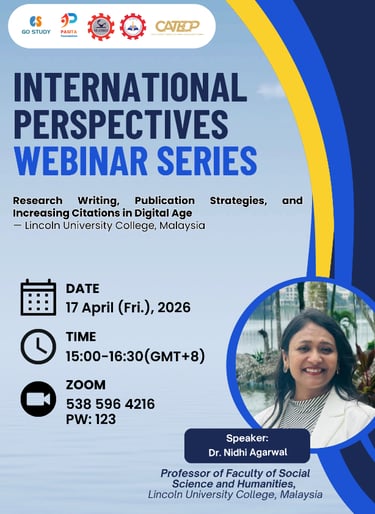
Topic: Research Writing, Publication Strategies, and Increasing Citations in Digital Age
Speaker: Dr. Nidhi Agarwal, Professor, Faculty of Social Science and Humanities, Lincoln University College
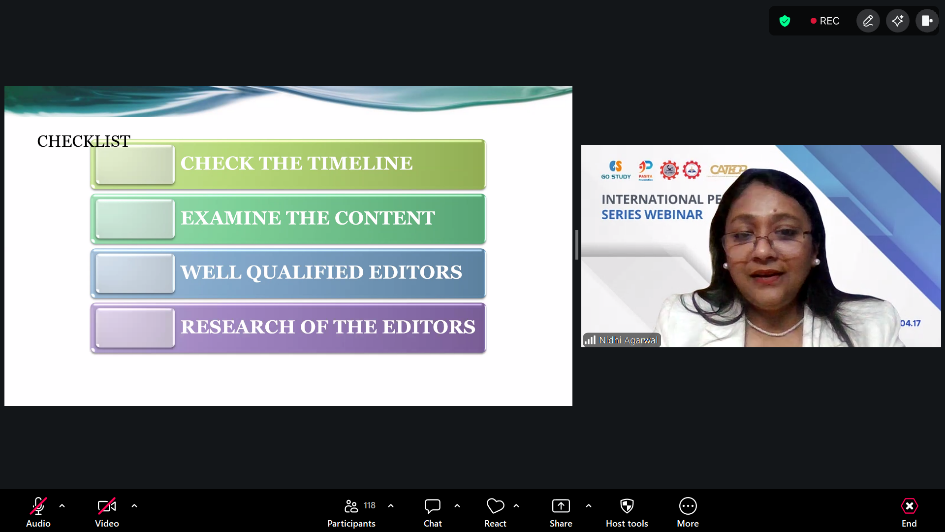
Dr. Nidhi explained that her presentation highlighted the risks of predatory journals and how they differ from credible academic journals. She described predatory journals as publishers that prioritize fees over quality, often skipping proper review processes and accepting papers too quickly. She outlined practical ways to recognize them, such as unclear editorial boards, lack of transparency, and absence from trusted indexing databases. She stressed that peer review is essential because it checks the accuracy, originality, and quality of research. She also discussed how researchers can improve their academic presence through citations and metrics like h-index and i10-index. She encouraged strategies to increase visibility, such as sharing work on academic platforms, using effective keywords, and building research networks. Lastly, Dr. Nidhi concluded by emphasizing ethical publishing, responsible citation, and choosing reputable journals to ensure long-term research impact.