International Experts Sharing - Automation and Intelligent Control in Equipment Manufacturing
Pasita
3/16/20264 min read
01 Event Report
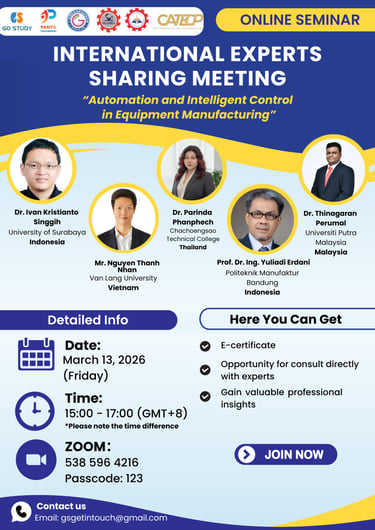
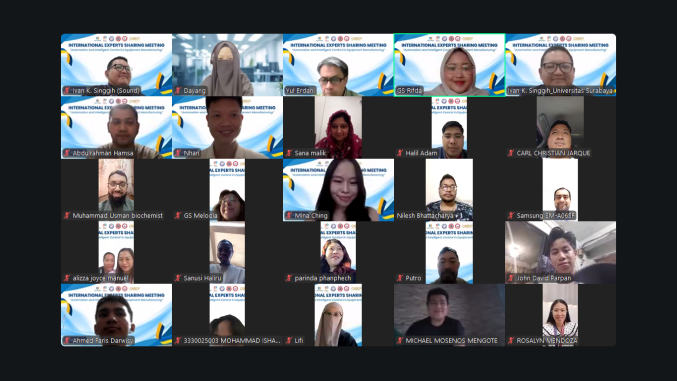
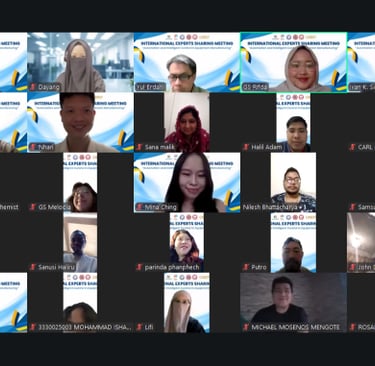
On the afternoon of March 13, 2026, the 14th session of the “International Experts Sharing Meeting”, jointly organized by CATECP, SEAMEO TED, PASITA, and Go Study, was successfully concluded online. Themed “Automation and Intelligent Control in Equipment Manufacturing,” the meeting brought together experts from Indonesia, Vietnam, Thailand, and Malaysia to discuss key technologies such as digital twins, machine learning, smart robots, and AIoT. Youth coordinators from various countries participated throughout the execution, ensuring smooth operations while listening to frontier shares as future practitioners, demonstrating organizational capability and responsibility amidst technological change.
02 Speech Highlights
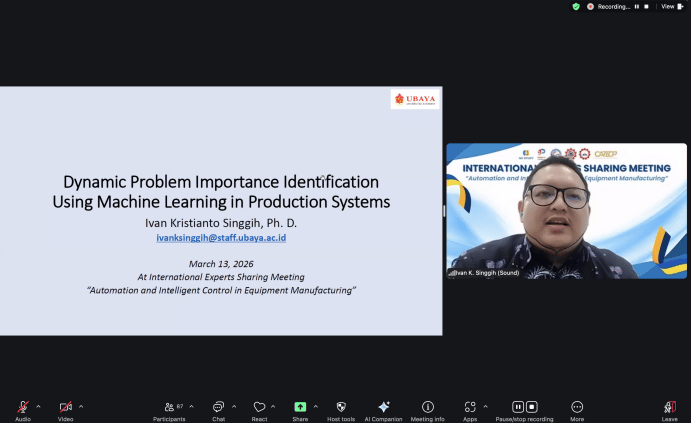
Dynamic Problem Importance Identification Using Machine Learning in Production Systems
Dr. Ivan Kristianto Singgih, Assistant Professor, Department of Industrial Engineering, University of Surabaya, focused on the application of machine learning in identifying dynamic problems within complex production systems. He noted that under Industry 4.0, sensor and big data technologies support intelligent decision-making, and analyzing operational data can identify key issues affecting system efficiency. Using cases from logistics and container terminal operations, he demonstrated how machine learning models analyze loading sequences and transportation scheduling, indicating that this approach helps improve decision-making efficiency and overall operational performance in complex manufacturing environments.
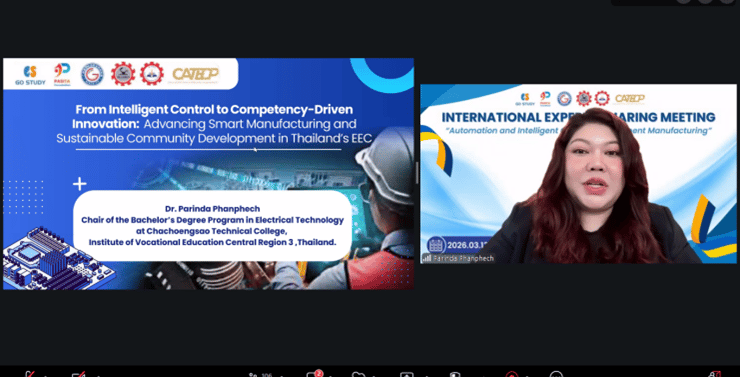
From Intelligent Control to Competency-Driven Innovation: Advancing Smart Manufacturing and Sustainable Community Development in Thailand's EEC
Dr. Parinda Phanphech, Chair of the Bachelor’s Degree Program in Electrical Technology, Chachoengsao Technical College, introduced the role of competency-based education in supporting smart manufacturing development in Thailand's Eastern Economic Corridor (EEC). She noted that with the rapid development of automation and digital manufacturing technologies, industry demand for talent with electrical systems and IoT integration capabilities is growing. She shared experiences on enhancing students’ industry adaptability through outcome-based education models and industry-academia collaboration at Chachoengsao Technical College, stating that strengthening synergy between educational institutions, enterprises, and communities helps promote regional innovation and the construction of a smart manufacturing ecosystem.
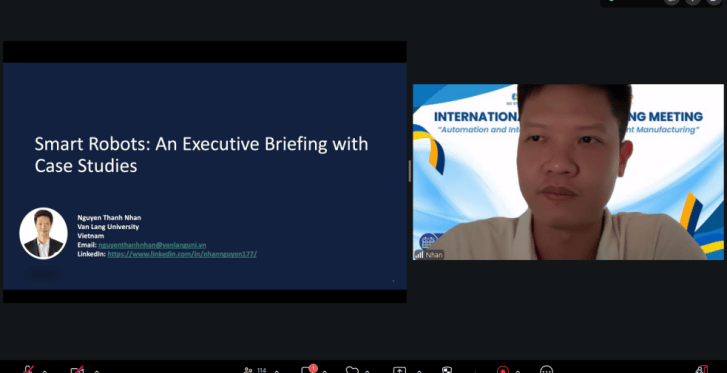
Smart Robots: An Executive Briefing with Case Studies
Mr. Nguyen Thanh Nhan, Technology and Digital Leader in AI, Automation, and Digital Transformation, Van Lang University, introduced the application of smart robots in promoting industrial digital transformation. He noted that smart robots integrate technologies such as AI and edge computing, enabling them to perform autonomous tasks in complex environments and collaborate with humans. Through multiple cases, he demonstrated practical applications of smart robots in remote inspection of industrial facilities, predictive maintenance, and automated warehousing, indicating that smart robots can effectively reduce operating costs, improve production efficiency, and alleviate labor shortages, playing a more important role in future industrial systems.
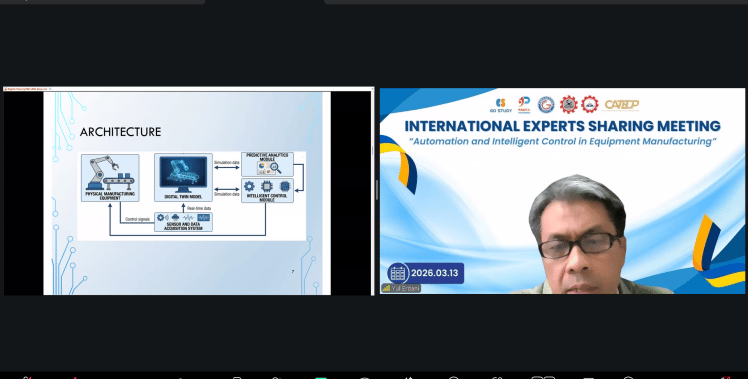
Digital Twin-Driven Intelligent Control for Equipment Manufacturing Optimization
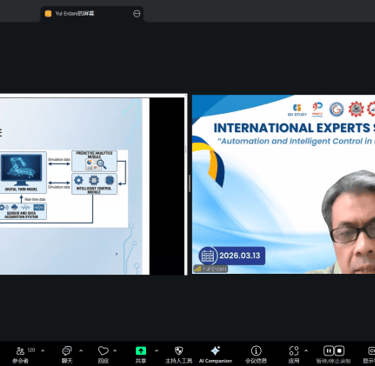
Dr. Yuliadi Erdani, Professor, Chairman of the Academic Senate, Politeknik Manufaktur Bandung, introduced the application of digital twin technology in optimizing equipment manufacturing systems. He noted that digital twins achieve real-time monitoring, predictive analysis, and intelligent control of equipment operating status by building virtual models of real equipment. In the Industry 4.0 environment, real-time data synchronization between physical equipment and digital models can be achieved through sensors and communication networks. Research shows that this technology can effectively improve equipment utilization, enhance production efficiency, and reduce downtime, providing an important technical path for building smarter and more efficient manufacturing systems.
Artificial Intelligence of Things: Powering the Next Wave of Smart Manufacturing
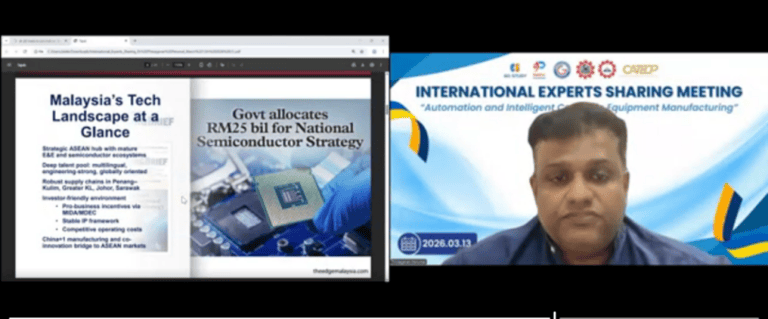
Dr. Thinagaran Perumal, Associate Professor, Head of Department of Computer Science, Faculty of Computer Science and Information Technology, Universiti Putra Malaysia, introduced the application of Artificial Intelligence of Things (AIoT) in smart manufacturing systems. He noted that AIoT combines AI and IoT technologies to enable interconnectivity among various sensors, devices, and production systems, utilizing data analysis and intelligent algorithms to enhance production decision-making capabilities. In industrial environments, AIoT can be applied to scenarios such as equipment predictive maintenance, smart factory monitoring, and production process optimization. He stated that AIoT will become an important technical force driving the development of future smart manufacturing, helping to build a smarter, more efficient, and sustainable industrial system.
03 Our Reflections
This exchange revealed that smart manufacturing is not just a technological upgrade but a reshaping of production methods and talent definitions. Facing opportunities and challenges from automation and AI, youth need interdisciplinary digital literacy and adaptive skills. PASITA believes technology should serve inclusive growth; we are committed to empowering youth with key future skills, ensuring that in the journey towards Industry 4.0, young people are not only beneficiaries but also creators driving sustainable manufacturing and regional prosperity.