International Sharing Meeting : Smart Agriculture Training for Rural Development
Pasita
4/17/20265 min read
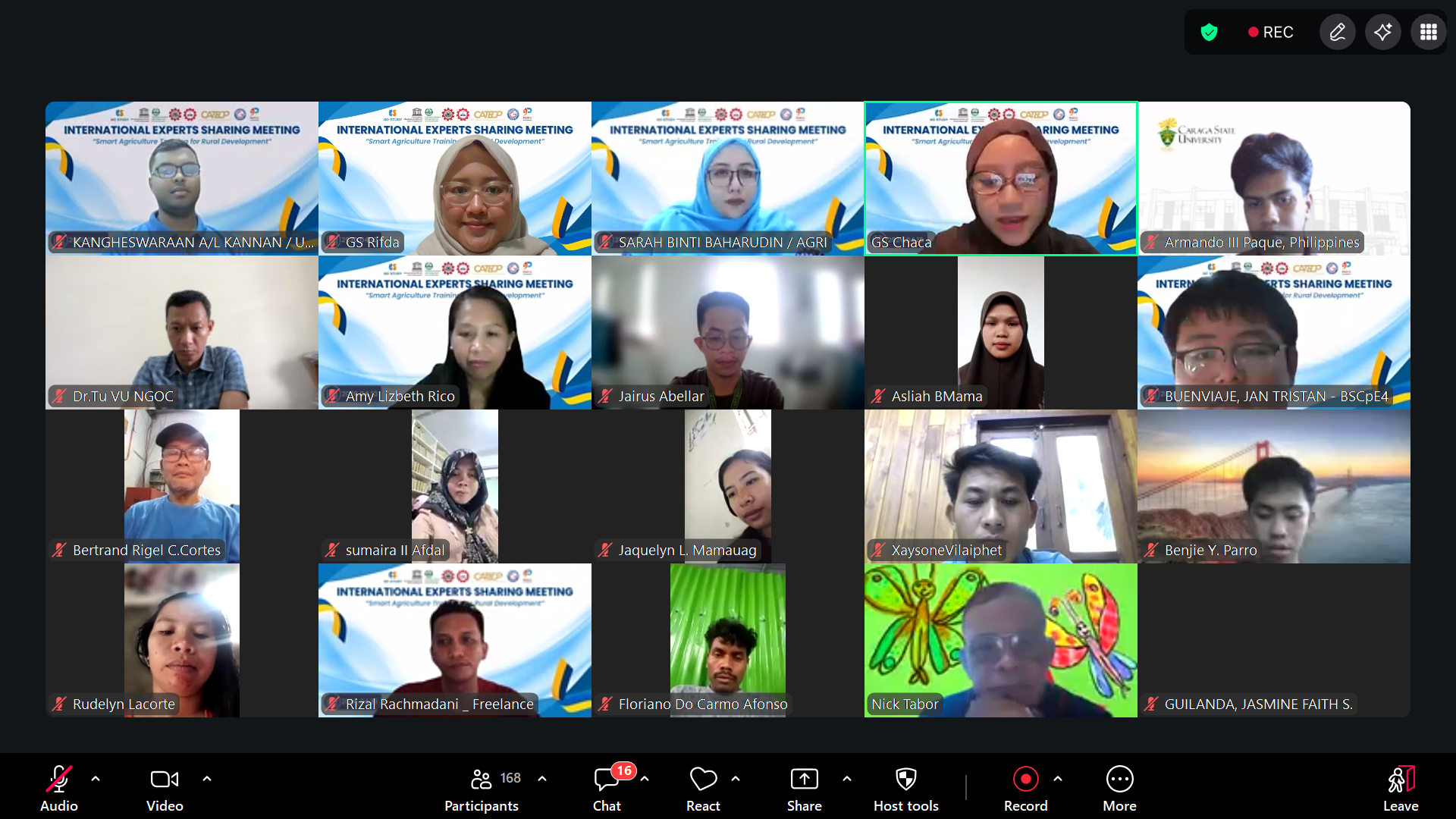
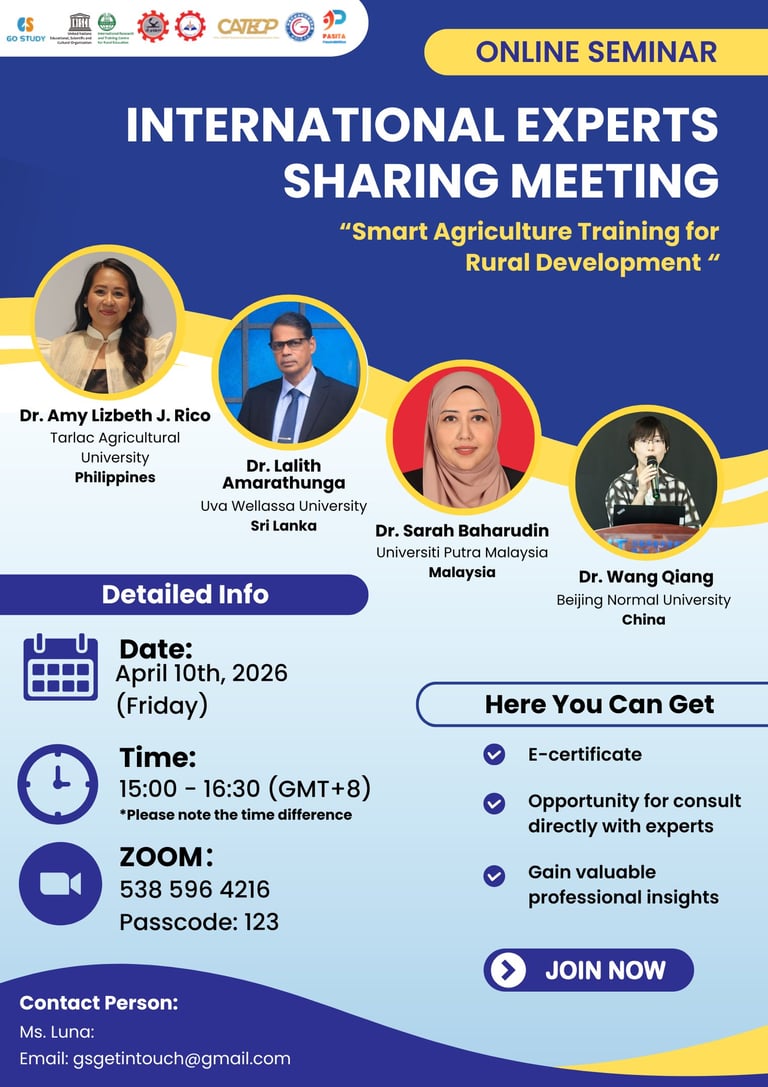
On the afternoon of April 10, 2026, the 4th session of the “International Experts Sharing Meeting,” jointly organized by the China-ASEAN Technical Education Cooperation Platform (CATECP), the Southeast Asian Ministers of Education Organization Regional Centre for Technical Education Development (SEAMEO TED), UNESCO International Research and Training Centre for Rural Education (INRULED) and Go Study Global Education, was successfully concluded online. The meeting was attended by 115 male and 97 female participants, making a total of 213 participants.
Themed “Smart Agriculture Training for Rural Development”, the meeting brought together experts and scholars from China, Sri Lanka, Philippines, and Malaysia. Discussions focused on the training of smart agriculture aiming for rural development. These topics were explored through keynote speeches, case studies, and interactive exchanges.
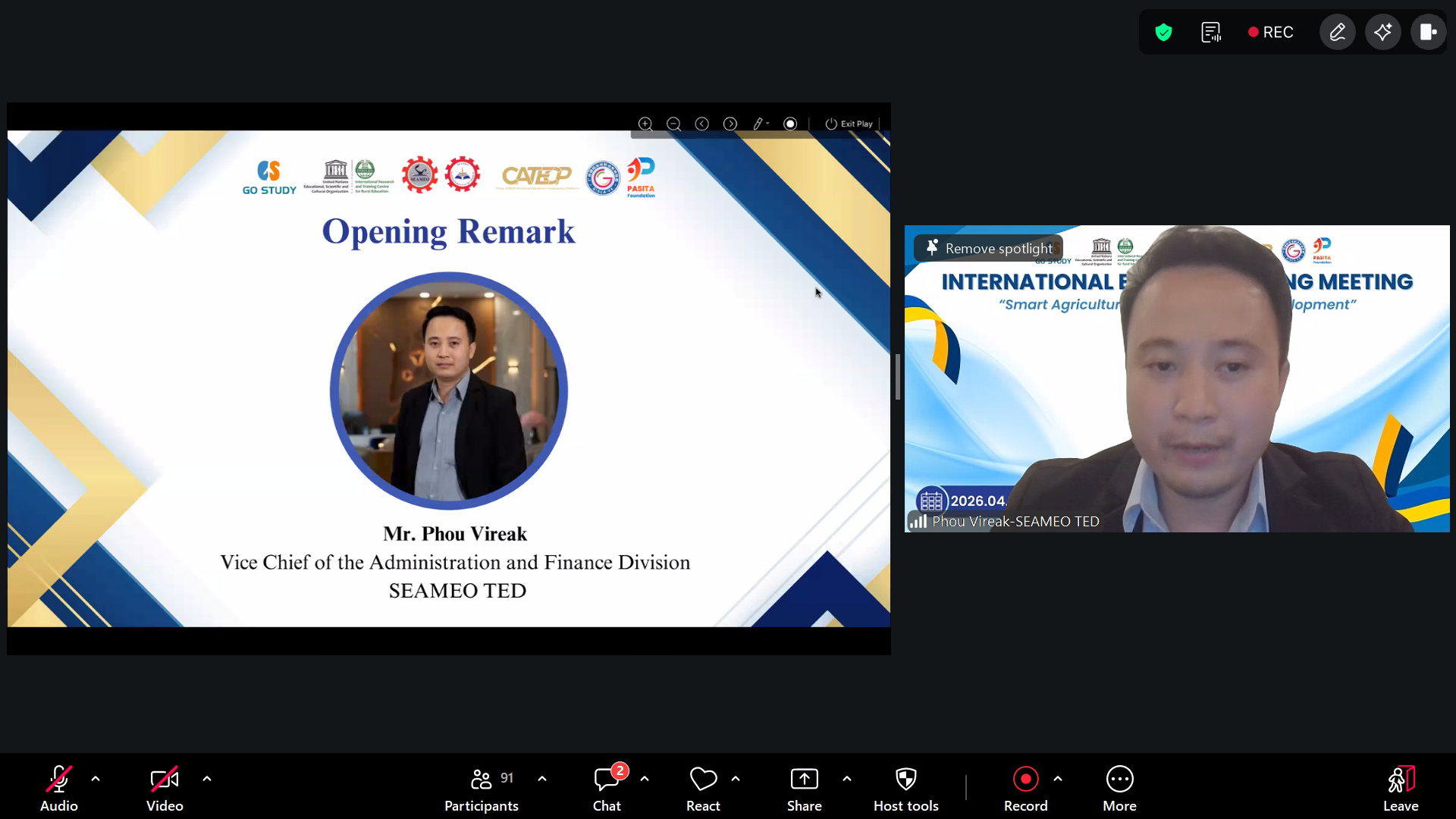
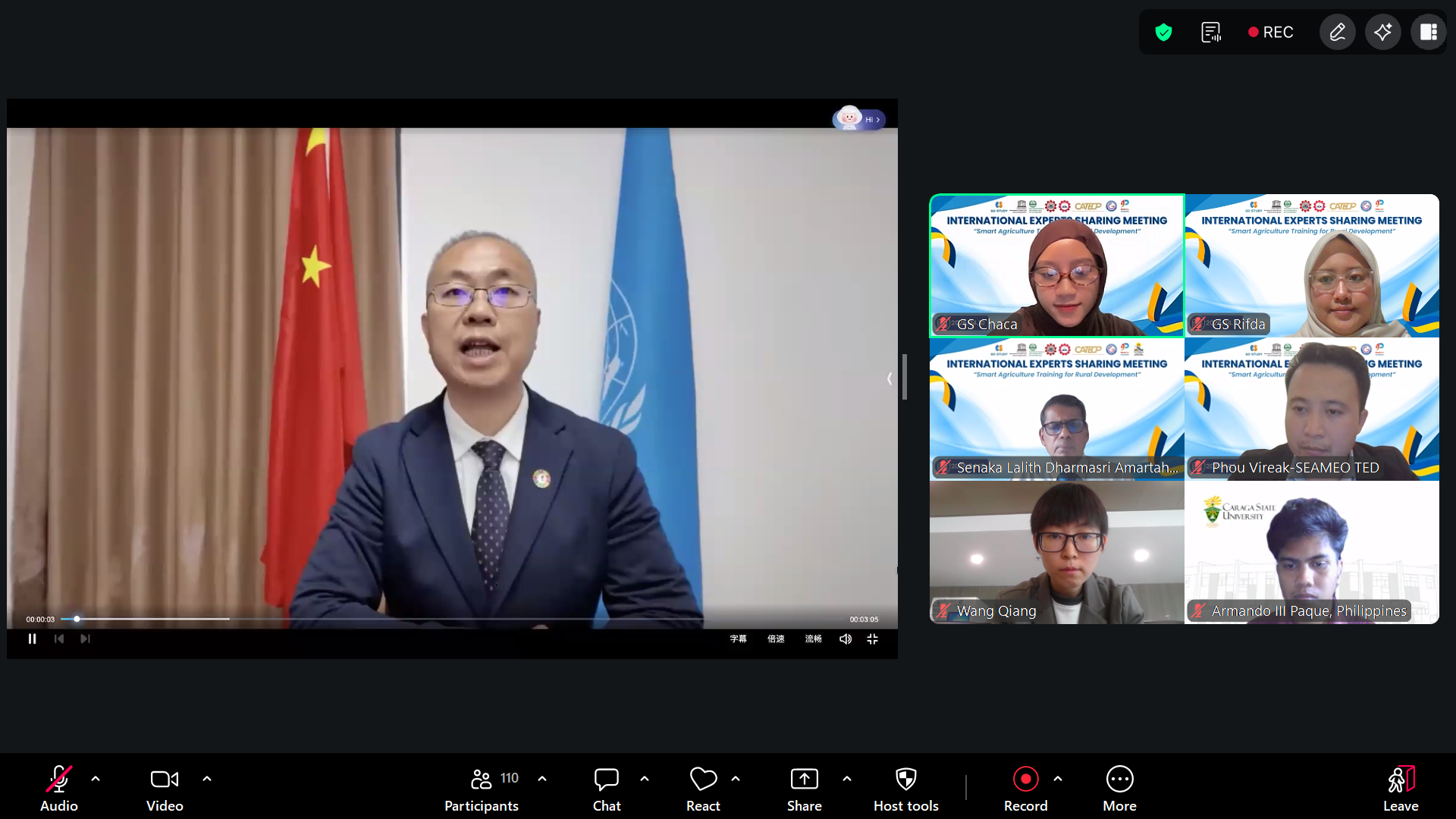
The first opening remark was delivered by Mr. Phou Vireak, Vice Chief of the Administration and Finance Division of SEAMEO TED. He emphasized on how rural development is the main key to a lot of countries. In today repeatedly changing world, rural development is important for a lot of countries. In order to do it, it is necessary to improve productivity, ensure the field security, and create sustainable innovations especially for the agriculture sector. Later he mentioned that dialogue, knowledge exchange and international collaboration are needed in order to understand not only the ways to develop our countries’ rural communities by adapting to new emerging technologies but also to addresses the challenges that are faces by rural communities nowadays. Lastly he encouraged the participants to be actively engaged in the discussions with the experts in order to gain more knowledge on the topic discussed.
【Opening Remarks】
The second opening remark was delivered by Dr. Zhao Yuchi, Executive Director of UNESCO INRULED. He emphasized on how rural development does not only happen because of technologies but also through human collaboration. There are 2.33 billion people experiencing moderate severe food insecurity with approximately 1/3 of them living in rural areas. At the same time, climate change, demographic shifts, and digital innovations present both opportunities and challenges to agriculture production in rural communities. Smart agriculture has been proven to improve productivity, but real development cannot only rely on technologies alone. We need humans to ensure these technologies reached the rural communities. Dr. Zhao encouraged the participants to reflect on how collaborations with stake holders can be fostered, how these technologies can be designed to ensure inclusive and equitable access, and how rural development can be reached through community based educational platforms. He hoped the event can inspire new ideas, strengthen partnerships, and also contributing to more effective approaches to smart agriculture training.
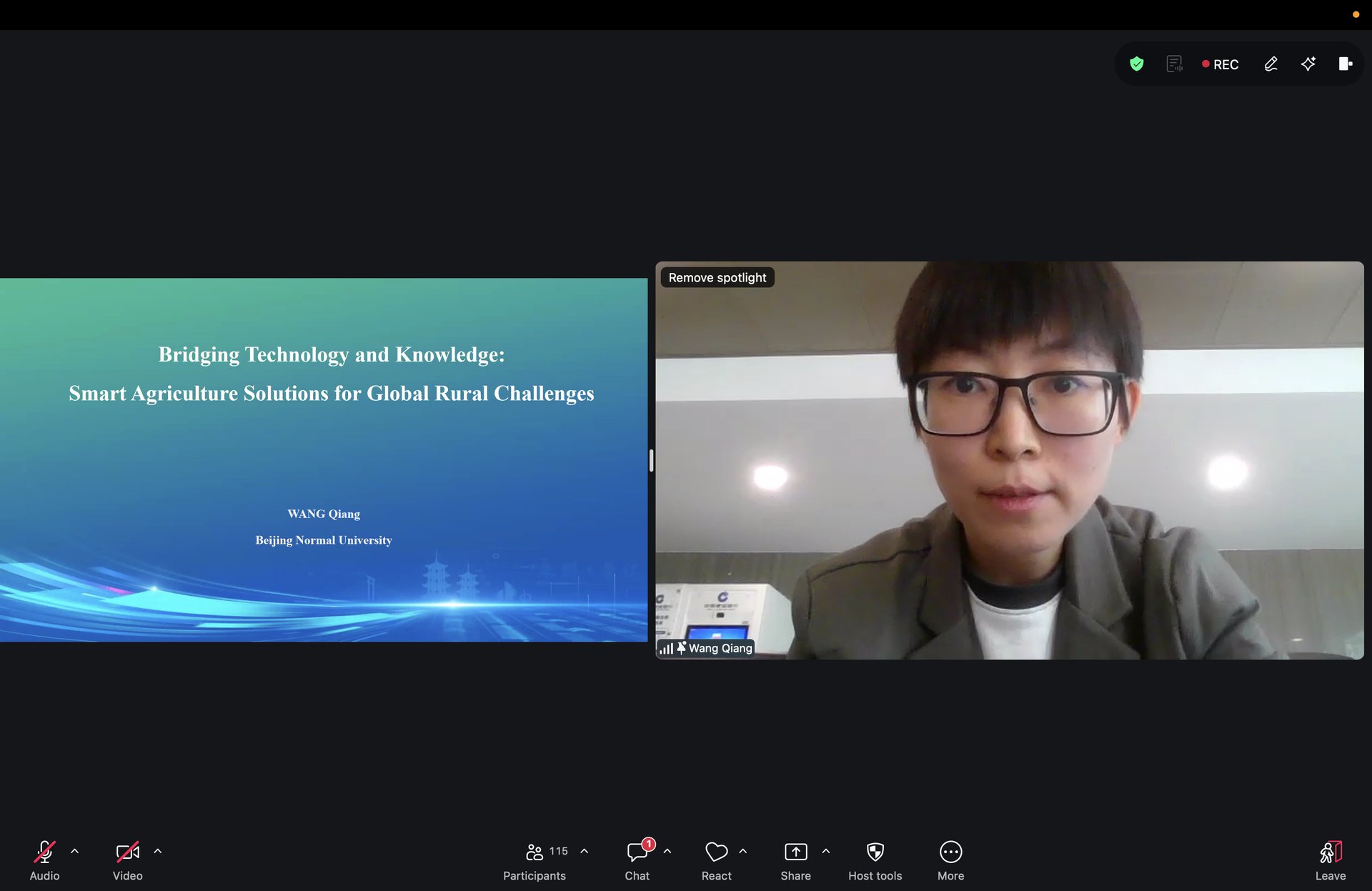
Speaker: Dr. Wang Qiang
Postdoctoral Research Fellow, Faculty of Education, Beijing Normal University, China
Topic: Bridging Technology and Knowledge: Smart Agriculture Solutions for Global Rural Challenges
Dr. Wang Qiang firstly mentioned the challenges of rural agriculture development such as labor shortage, low mechanization, pesticide pollution, and lack of training. She then details the transformative power of smart agriculture in addressing rural challenges. She explained that while AI and robotics boost productivity, success is fundamentally tethered to training and knowledge transfer. Centering on a UAV electrostatic centrifugal spraying case study, she illustrates how innovation significantly improves orchard coverage while reducing pesticide use by 30–50%. Not only that, the innovation also improves the efficiency for farmers to pest control and also improving the safety as well as maintaining protection to the environment. By training over 2,000 professionals and collaborating with international experts, Dr. Wang concludes that the government need to invest in training, education, knowledge sharing, cross-disciplinary collaboration and focuses on empowering farmers in order to reach sustainable rural development.
【Sharing Session】
Speaker: Dr. Senaka Lalith Dharmasri Amarathunga
Head, Department of Export Agriculture, Faculty of Animal Science and Export Agriculture, Uva Wellassa University, Sri Lanka
Topic: Advancing Rural Development through Innovative Smart Agricultural Training: Global Perspective
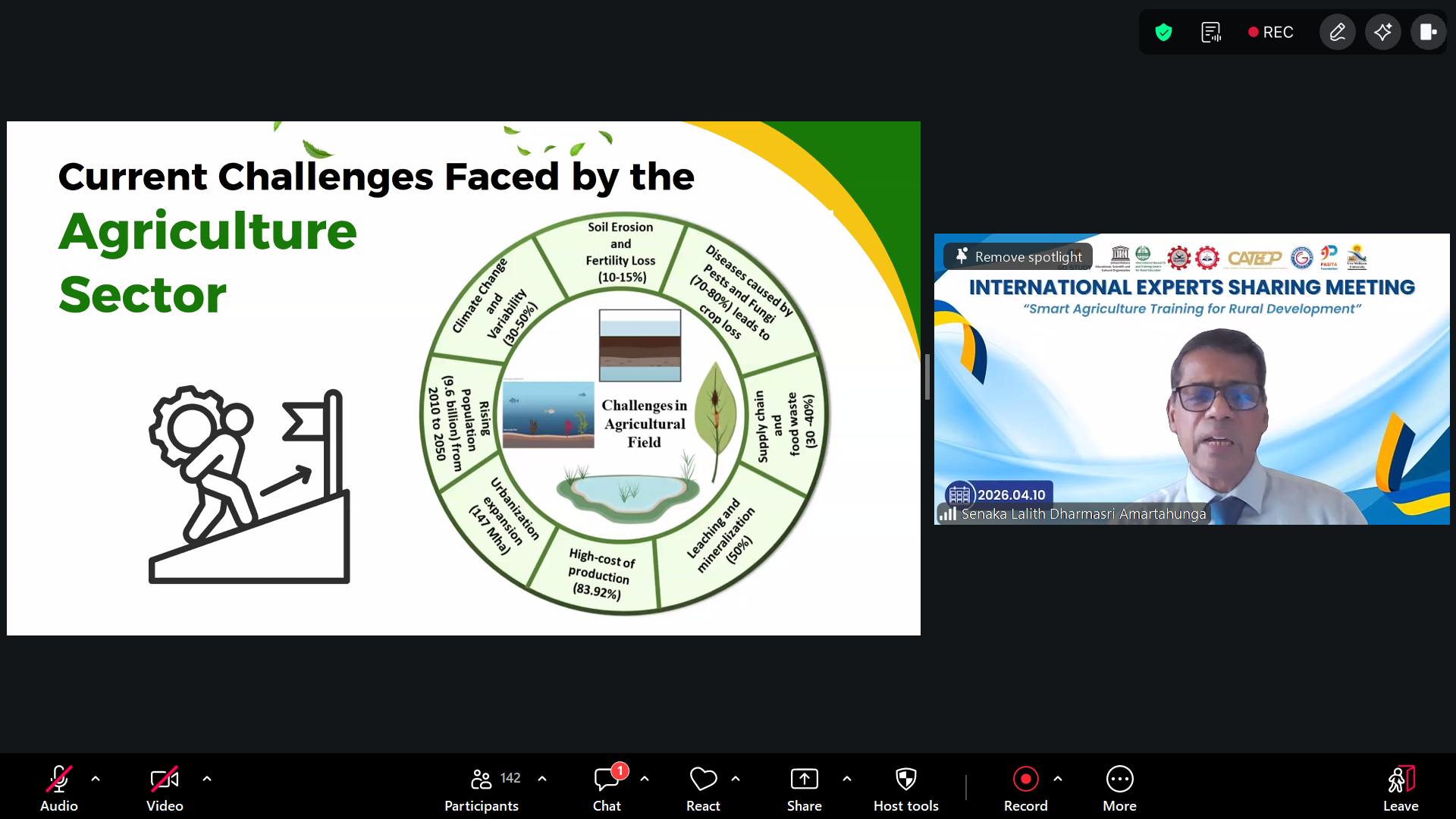
In his presentation, Dr. Lalith Amarathunga highlights the critical need for Smart Agriculture to address a increasing world population, which is projected to reach nearly 10 billion by 2050. To ensure global food security, he emphasizes that production must increase by 70% without expanding agricultural land. This evolution, named Agriculture 4.0, integrates IoT, AI, and big data to overcome systemic challenges such as climate variability, high production costs, and soil fertility loss. A central pillar of this transformation is the Next-Gen Z Agro-farming community. Recognizing that traditional farming is declining among youth, Dr. Amarathunga advocates for purpose-driven, tech-centric careers. He introduces the 5 E’s Framework which are Educationalism, Environmentalism, Entrepreneurship, Empowerment, and Economic Resilience, specifically to empower Gen Z women who already comprise 43% of the global agricultural labor force. By shifting the mindset from manual labor to innovation-led business, youth can utilize digital tools like drones and data analytics to lead regenerative practices. Ultimately, Dr. Amarathunga concludes that fostering youth-adult partnerships and equitable access to training is essential to growing a sustainable, resilient rural future.
Speaker: Dr. Amy Lizbeth J. Rico
Associate Professor V, Tarlac Agricultural University, Philippines
Topic: Smart Agriculture Gearing Towards Food Security and Sustainability
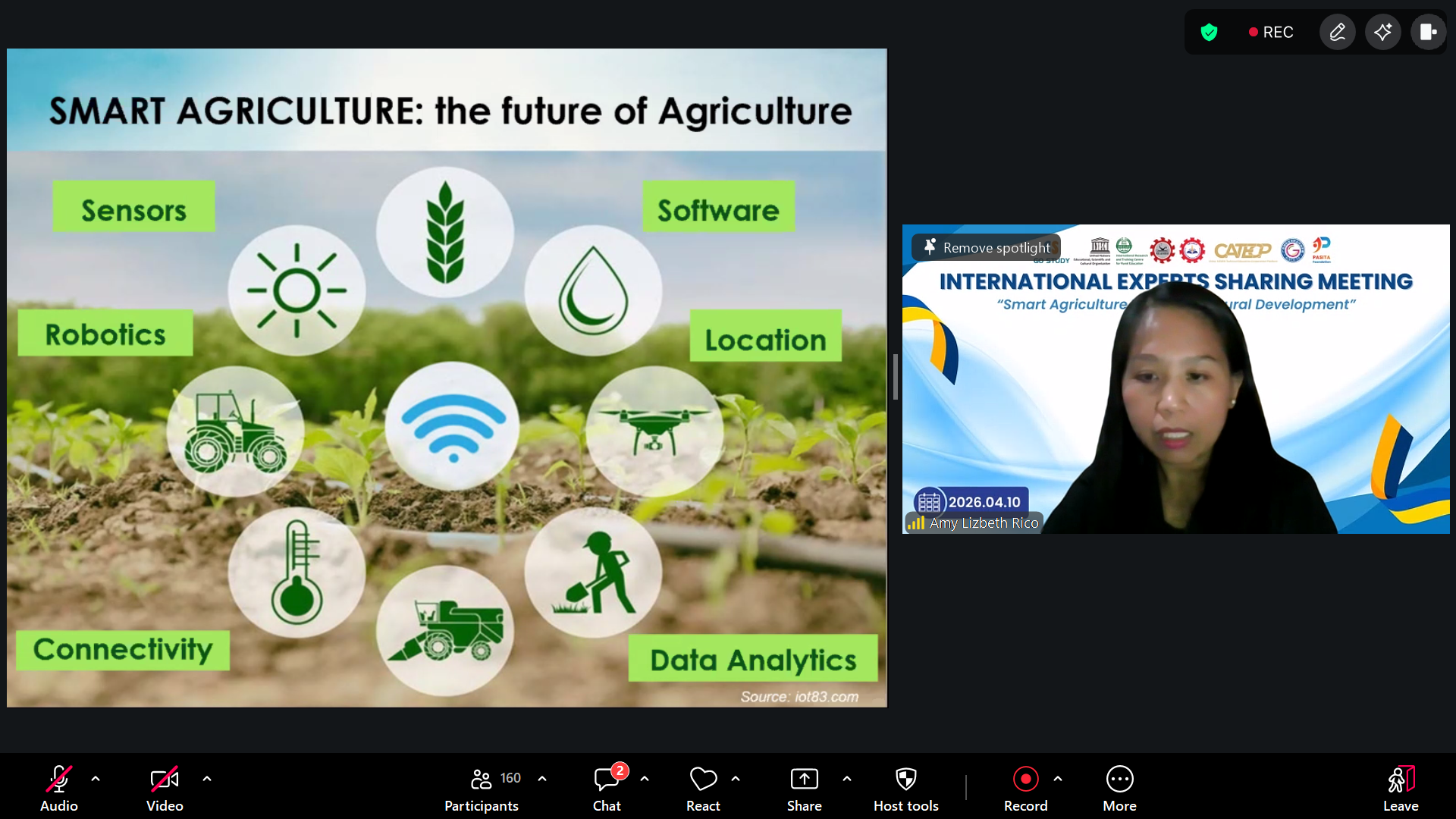
Dr. Amy Lizbeth J. Rico emphasizes that smart agriculture is the essential future for global food security. With the world population projected to reach 9.7 billion by 2050 and arable land remaining stagnant at roughly 10.8%, she argues that productivity must increase by 70% through technological innovation. A primary focus is addressing severe soil degradation, which claims 5-7 million hectares annually. Dr. Rico advocates for soilless culture, including hydroponics, aeroponics, and aquaponics, as versatile solutions suitable for environments ranging from barren deserts to city rooftops. These systems utilize sensors, robotics, and data analytics to optimize resource efficiency, increasing yields and plant health while eliminating soil-borne pathogens. By shifting from intuition-based tradition to data-driven forecasting, smart agriculture lowers costs and mitigates risks. Crucially, Dr. Rico explains that this technological investment reduces hard labor and improves quality of life, serving as a vital tool to attract younger generations back to rural agricultural activities. Ultimately, she views achieving food security through these innovations as a shared global responsibility.
Speaker: Dr. Sarah Baharudin
Senior Lecturer, Department of Crop Science, Faculty of Agriculture, Universiti Putra Malaysia, Malaysia
Topic: Empowering Rural Landscapes through Smart Horticulture and Technology Adoption
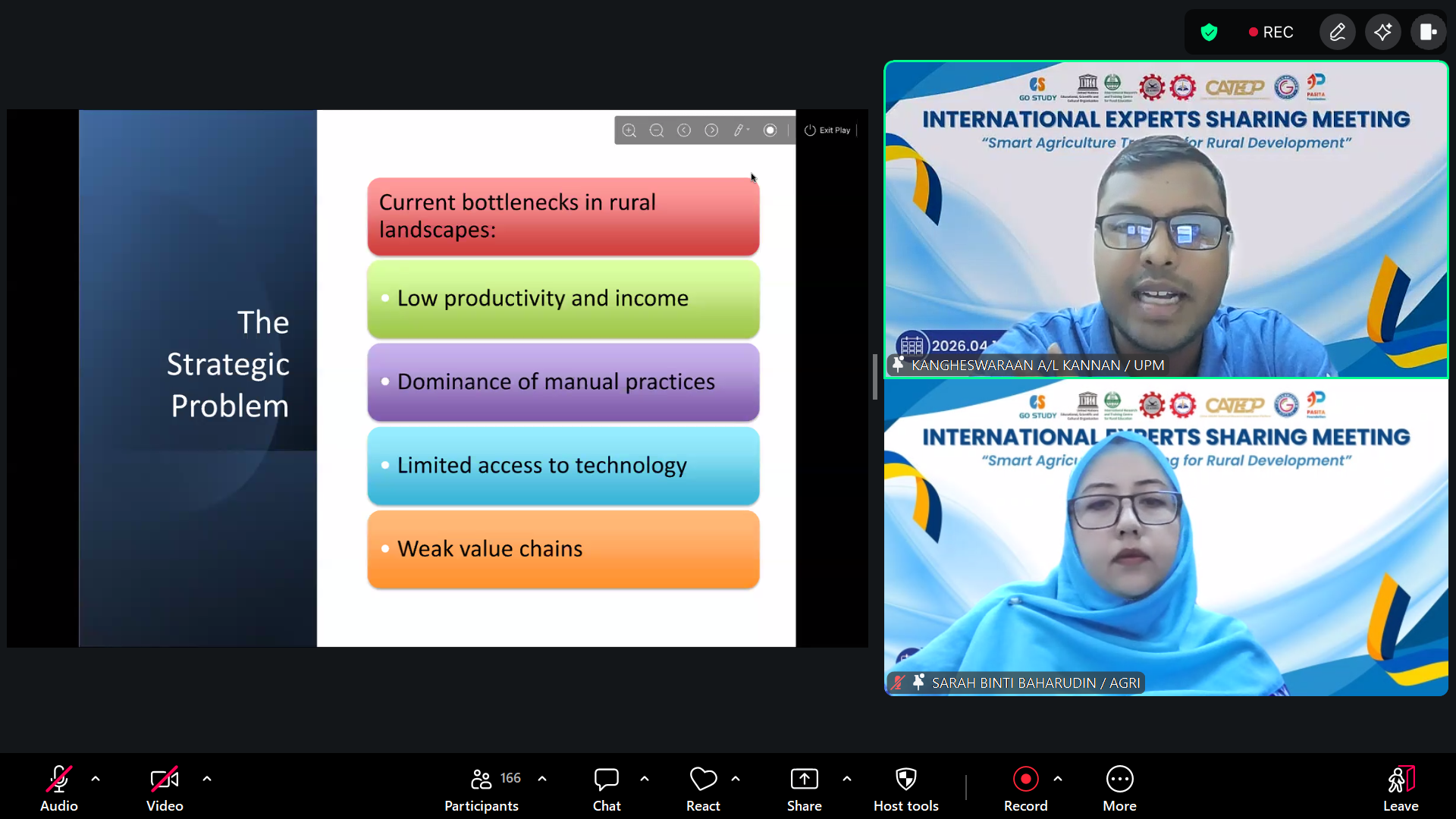
Dr. Sarah Baharudin addresses the strategic bottlenecks in rural landscapes, such as low income and manual labor dominance, by advocating for a transition to Smart Horticulture. She argues that the shift from traditional to data-driven systems creates unique opportunities for income-generating landscapes. This transformation is supported by four key technology pillars which are IoT-based irrigation, smart nursery management, plant diagnostic mobile applications, and drone-assisted monitoring. The core framework for success rests on three pillars: training and skills, technology adoption, and market integration. She highlights specific digital tools, such as soil sensors for real-time data, automated fertigation, and AI-powered pest detection, to modernize plant production. These advancements foster new rural business models, including professional landscape services and eco-tourism ventures. To overcome barriers like high initial costs and resistance to adoption, she recommends establishing innovation hubs and public-private partnerships. Ultimately, Dr. Baharudin concludes that smart horticulture is essential for building resilient rural development, leading to measured outcomes in economic growth, environmental sustainability, and social empowerment.