International Youth Talk - Are Digital Coins Making Spending More Fun or More Risky
Pasita
6/23/20264 min read
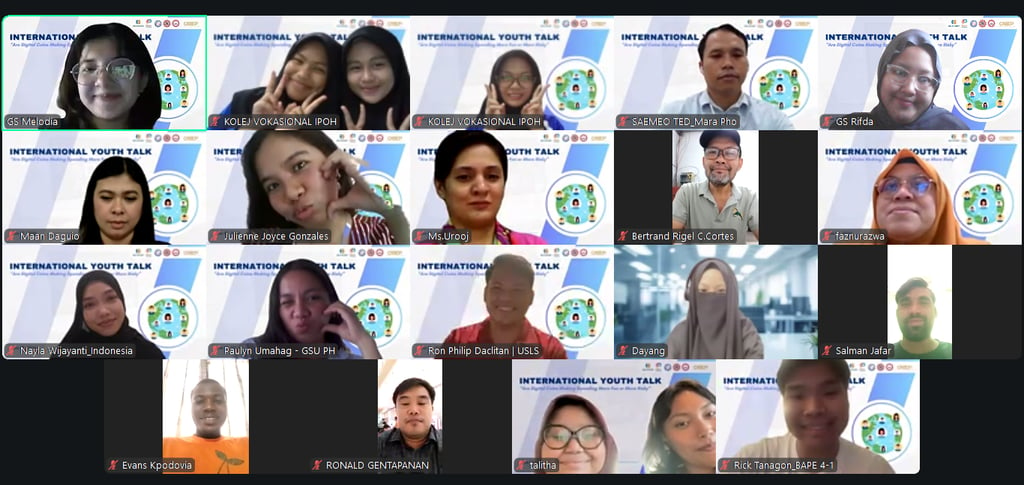
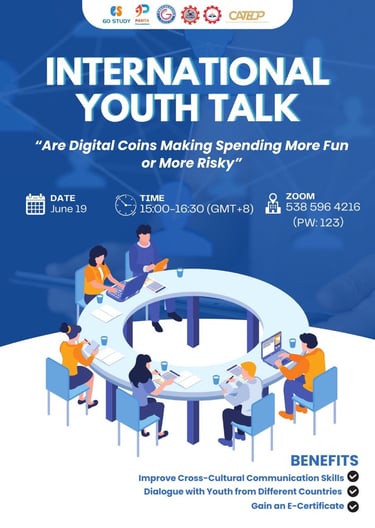
On the afternoon of June 19, 2026, the 6th session of the “International Youth Talk,” jointly organized by the Southeast Asian Ministers of Education Organization Regional Centre for Technical Education Development (SEAMEO TED), the China-ASEAN Technical Education Cooperation Platform (CATECP), with support from The Southeast Asia Youth Sustainable Development Foundation (PASITA), was successfully concluded online. The meeting was attended by 32 male and 32 female participants, making a total of 64 participants.
The events featured online presentations by youth representatives from universities across multiple countries including Indonesia, Malaysia, and the Philippines. Centered around the theme of “Are Digital Coins Making Spending More Fun or More Risky”, the youth showcased fresh perspectives with a global vision, sparking creative and cross-cultural exchanges.
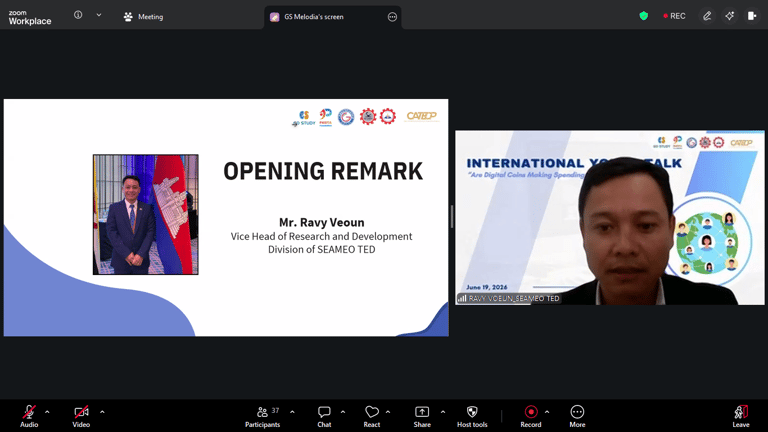
01 Opening Remarks
The opening remarks were given by Mr. Ravy Veoun, Vice Head of the Research and Development Division from SEAMEO TED. He emphasized on how new innovations such as cryptocurrency offer convenience and new opportunities, they also raise questions about risk, security, and financial responsibility. Therefore, people need to deepen their understanding regarding the benefits and challenges of digital financial technologies. Ultimately, he encouraged the participants to discuss and exchange knowledge in this event to broaden their understanding about digital coins and currencies.
02 Presentation Highlights
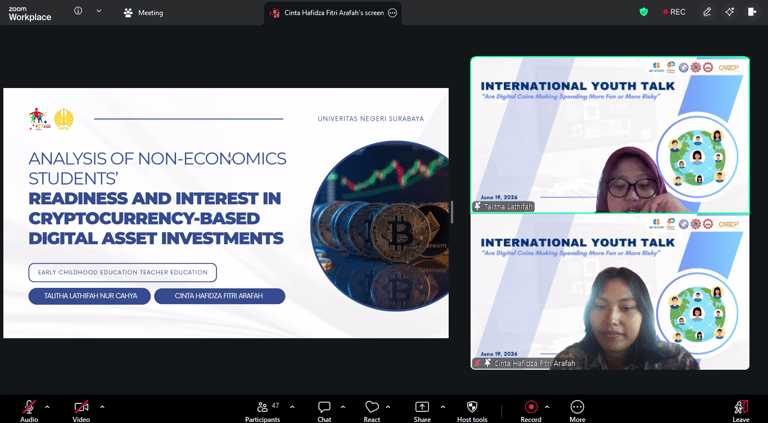
Representatives from Universitas Negeri Surabaya analyzed non-economics students' readiness and interest in cryptocurrency investments. Utilizing a quantitative method with 78 participants, the study revealed that while more than 60% of crypto investors are under 30, increased awareness does not automatically translate to interest. Interestingly, students demonstrated low interest and readiness due to cryptocurrency volatility and high risk perception. However, readiness positively correlates with interest. The researchers concluded that universities must strengthen digital financial literacy to bridge this gap, helping students safely navigate the balance between digital asset opportunities and risks.
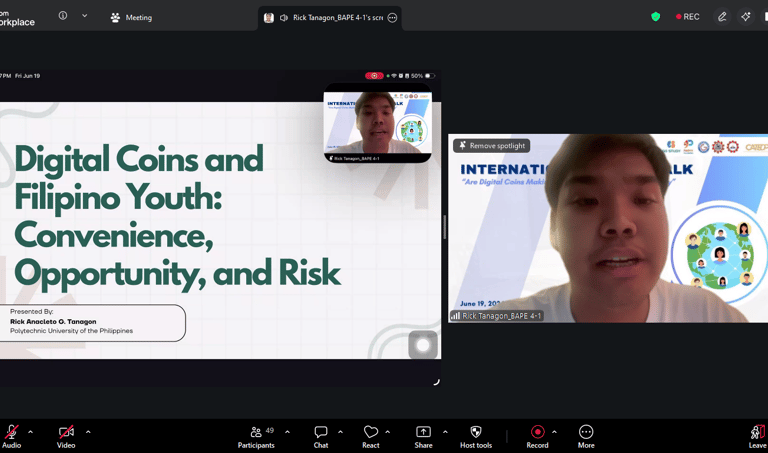
The speakers from Polytechnic University of The Philippines presented on how digital coins affect Filipino youth, weighing convenience against risk. Young Filipinos frequently use platforms like GCash and Maya for daily expenses and online shopping. While digital finance boosts financial inclusion, convenience, and tech interest, it introduces hidden dangers. Easy spending triggers impulse buying, cryptocurrency volatility creates financial instability, and online scams pose constant threats. To address this, the presenter outlined three priorities for the youth: strengthening financial literacy, improving digital scam-spotting literacy, and establishing responsible innovations with safer consumer regulations.
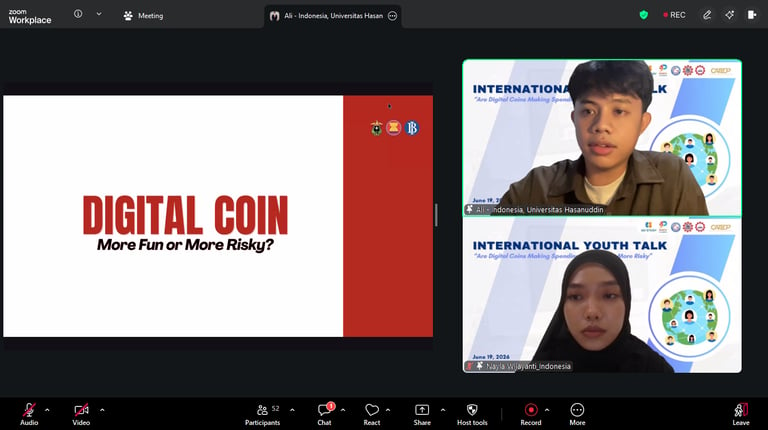
The speakers from Universitas Hassanudin explores Indonesia's pivotal digital payment crossroads. Bank Indonesia balances QRIS expansion and cross-border ASEAN transactions with monetary sovereignty through regulations like BI Regulation No. 4 of 2025. While QRIS has achieved massive growth, boosting MSME revenue and consumer convenience, digital illiteracy, data vulnerabilities, and impulsive spending expose users to financial harm. Consequently, the presenter highlights policy responses like the CBPR program and Project Garuda. Ultimately, the study recommends strengthening digital literacy, harmonizing cross-border regulations, promoting local currency usage, and closing the digital infrastructure divide to ensure secure, equitable growth.
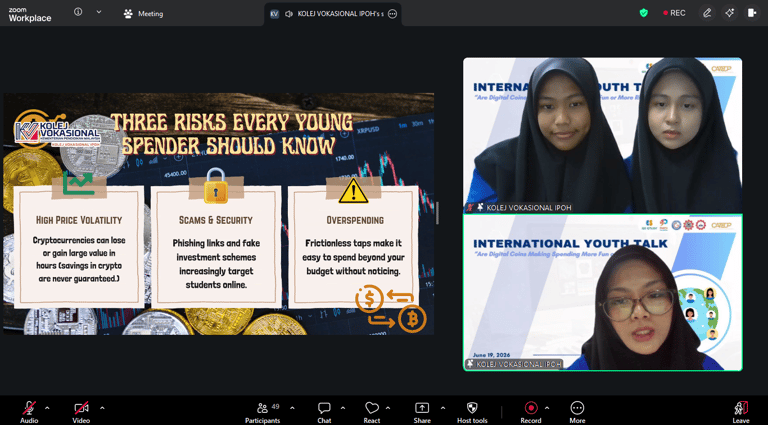
The student from Kolej Vokasional Ipoh, analyzed how even though digital coins offer gamified convenience, global accessibility, and investment potential via blockchain technology, there are also three main risks that the team introduced which are extreme price volatility, frictionless overspending, and sophisticated online scams. Highlighting a 2025 Malaysian scam where a businessman lost RM26.6 million, the team contrasted fraudulent applications with legitimate, Securities Commission-registered platforms like Luno. They concluded that digital coins are neither purely fun nor dangerous but rather, equipping youth with robust financial literacy is essential to navigating these tools wisely.
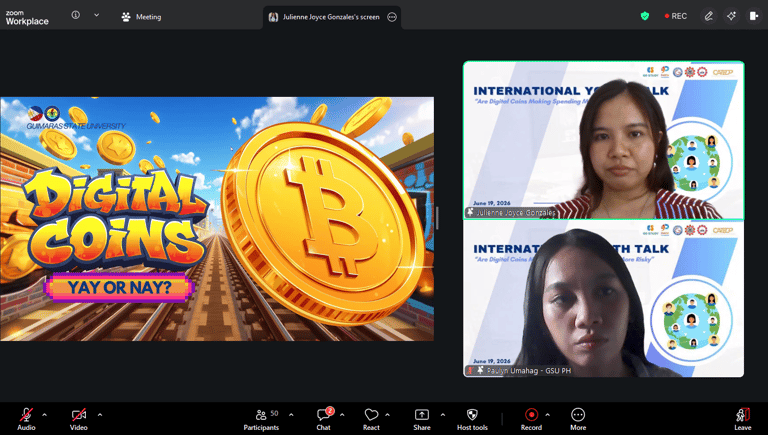
The representatives from Guimaras State University evaluated whether cryptocurrency is beneficial for the Philippines by examining its economic impacts, remittance benefits, and regulatory challenges. While digital assets are legal and regulated by the BSP and SEC, they offer clear pros like blockchain technology and faster, cheaper remittances. However, these are countered by severe volatility, transaction irreversibility, and susceptibility to illegal activities. Weighing these risks against the country's current financial literacy, cybersecurity preparedness, and regulatory capacity, the presenters ultimately voted "NAY," recommending cautious adoption over full-scale acceptance.