International Youth Talk | Ecological Protection: Can Sorting Trash Really Change The World
Pasita
5/29/20264 min read
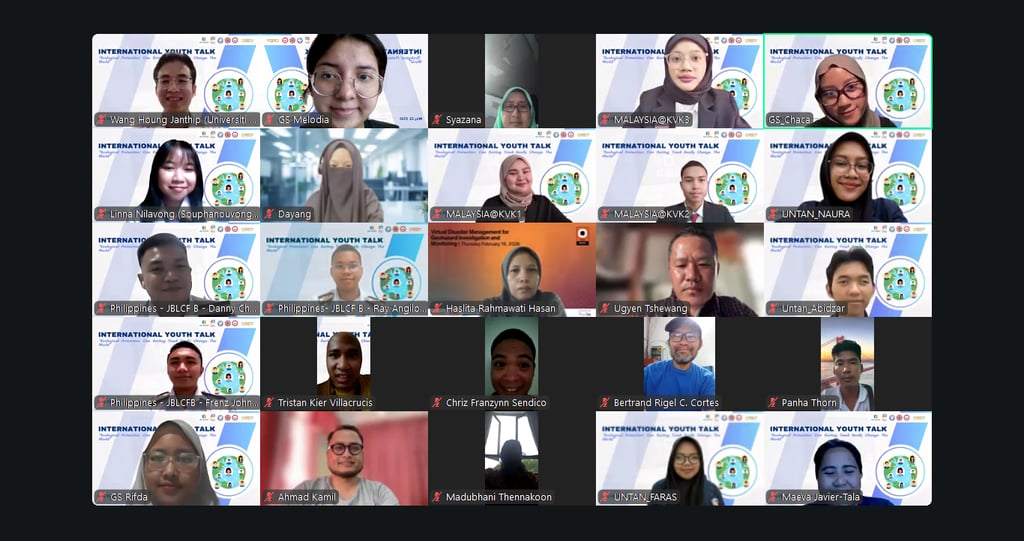
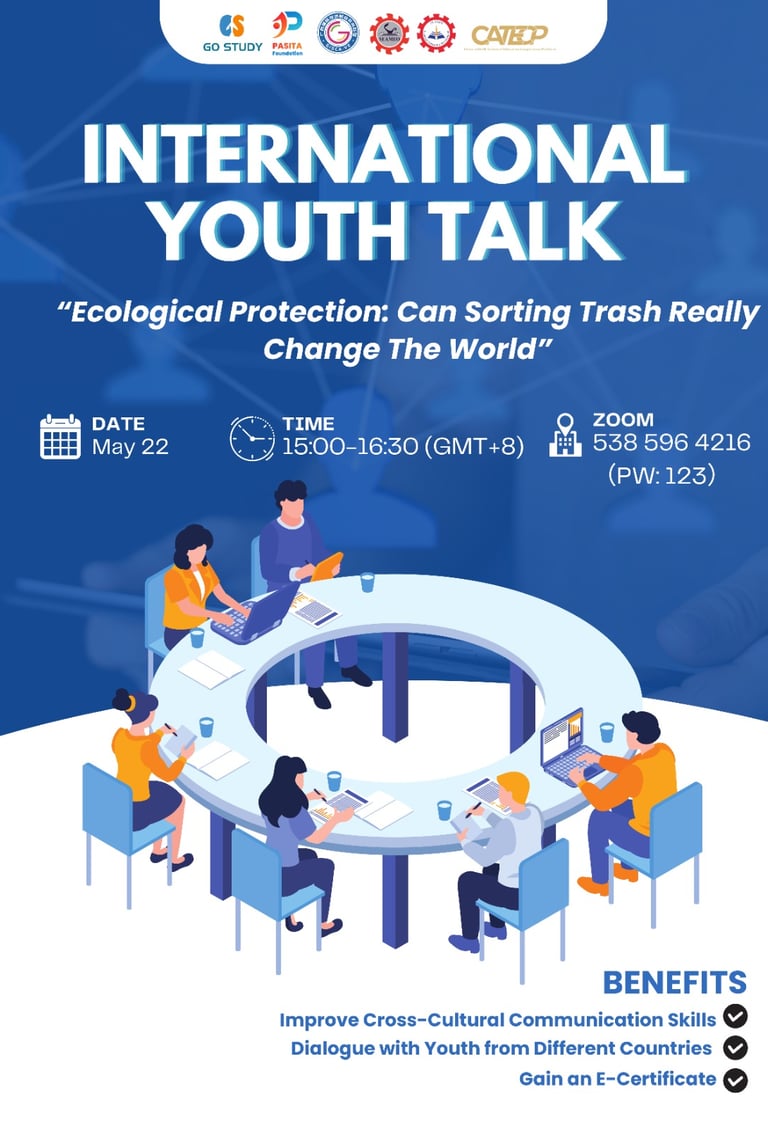
On the afternoon of May 22, 2026, the 5th session of the “International Youth Talk,” jointly organized by the Southeast Asian Ministers of Education Organization Regional Centre for Technical Education Development (SEAMEO TED), the China-ASEAN Technical Education Cooperation Platform (CATECP), with support from The Southeast Asia Youth Sustainable Development Foundation (PASITA), was successfully concluded online. The meeting was attended by 139 male and 142 female participants, making a total of 281 participants.
The event featured online presentations by youth representatives from universities across multiple countries including Indonesia, Malaysia, Brunei Darussalam, Laos, and the Philippines. Centered around the theme of “Ecological Protection: Can Sorting Trash Really Change The World”, the youth showcased fresh perspectives with a global vision, sparking creative and cross-cultural exchanges.
01 Opening Remarks
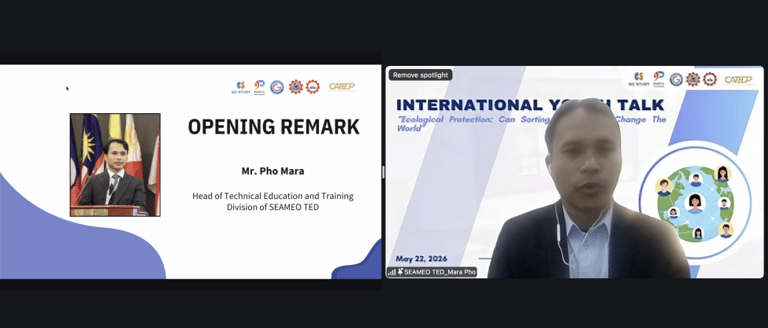
The opening remarks were given by Mr. Pho Mara, Head of the Technical Education and Training Division from SEAMEO TED. He emphasized on how small actions if practiced consistently by a lot of people, can create a big impact on our community. Moreover he mentioned how sorting is not only about cleanliness but also responsibility, sustainability, and building a better future for the next generation. Ultimately, he encouraged young people, especially the participants, to start doing practical actions such as waste sorting aiming for environmental protection and sustainable development.
02 Presentation Highlights
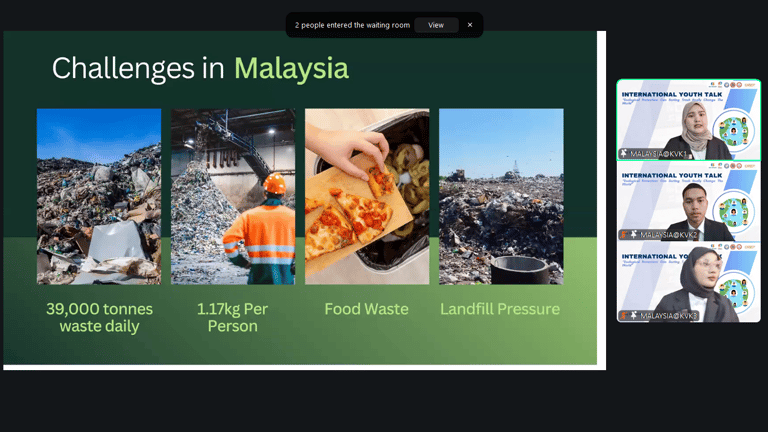
The representatives from Kerian Vocational College shared insights on whether trash sorting can truly change the world. First, they presented a brief overview about Malaysia’s waste management progress. Currently, Malaysia maintains a 37.9% recycling rate but faces challenges with high daily food waste and landfill pressure. The team highlighted successful initiatives such as E-waste processing and converting cooking oil into biodiesel. By examining South Korea’s RFID smart bins, which achieved a 49% recycling rate, the presenters proposed a roadmap for Malaysia focused on behavioral change and technological system improvements. They concluded that structured waste management is essential for a sustainable circular economy.
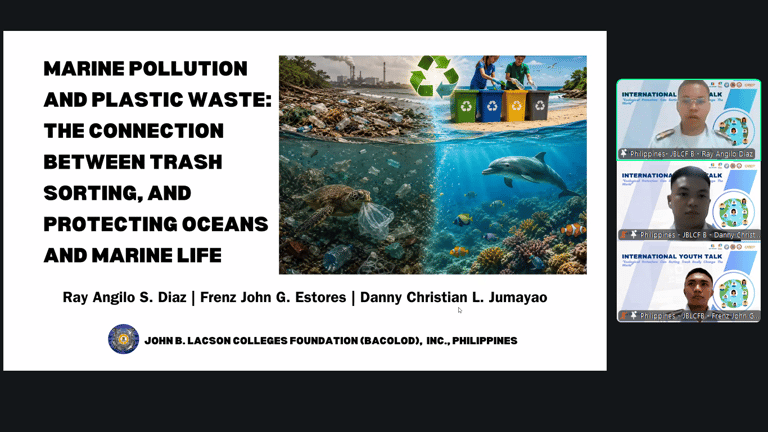
The speakers from John B. Lacson Colleges Foundation focused on the connection between protecting marine life and trash sorting. With 19 to 23 million tons of plastic entering oceans annually, the team highlighted how urban litter and sachets devastate biodiversity, from poisoning fish with microplastics to trapping dolphins in “ghost nets.” They emphasized that proper waste segregation is the primary defense, preventing plastics from reaching rivers and coastal areas. The presentation concluded that daily individual actions, such as reducing single-use plastics and supporting community cleanups, are vital for a sustainable circular economy and global ocean health.
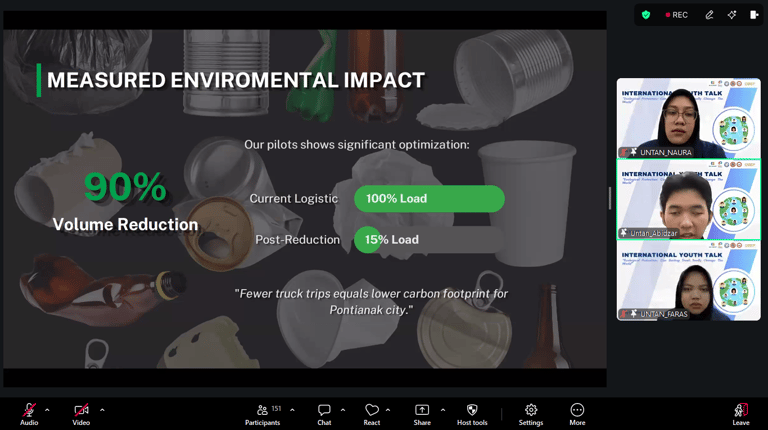
The speakers from Universitas Tanjungpura introduced “Scaling Small Actions” as an engineering-driven approach to ecological protection through circular systems. Addressing the “collect-haul-dump” dilemma, they highlighted how mixing trash at the source and hauling high-volume plastic air triples costs while organic waste generates methane in landfills. Their innovation features the Eco-Green Bottle Press, a manual, zero-electricity tool built from wood waste that reduces bottle volume by 90%. Furthermore, they close the organic loop using BSF maggots to convert waste into compost and animal feed. This systemic integration of engineering and biology transforms campus waste into high-value assets for a sustainable tropical ecosystem.
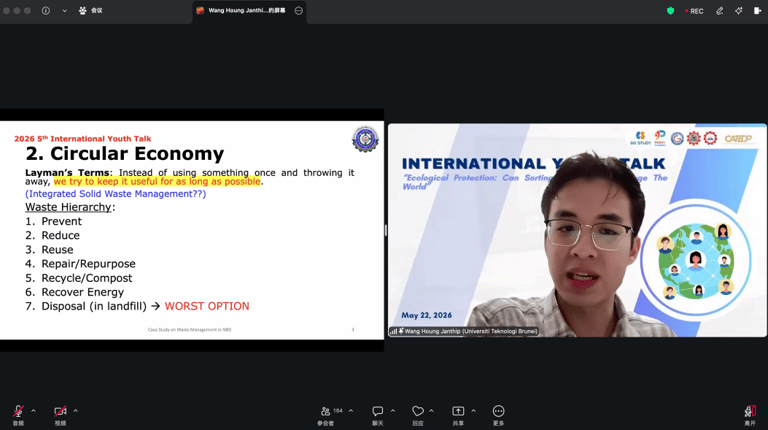
The student from University Of Technology Brunei, presented a case study on waste management in Brunei Darussalam. He stated that Brunei faces high waste generation, averaging 1.4 kg per person daily, with food waste comprising 36% of the total. Currently, 70% of waste ends up in landfills, despite 55% being recyclable. The presenter identified critical weaknesses, including the absence of a national waste policy, inadequate recycling facilities, and a lack of household-level segregation. He then concluded the presentation by proposing solutions focus on circular economy principles, introducing economic incentives, and increasing community awareness through environmental education to shift away from landfill dependency.
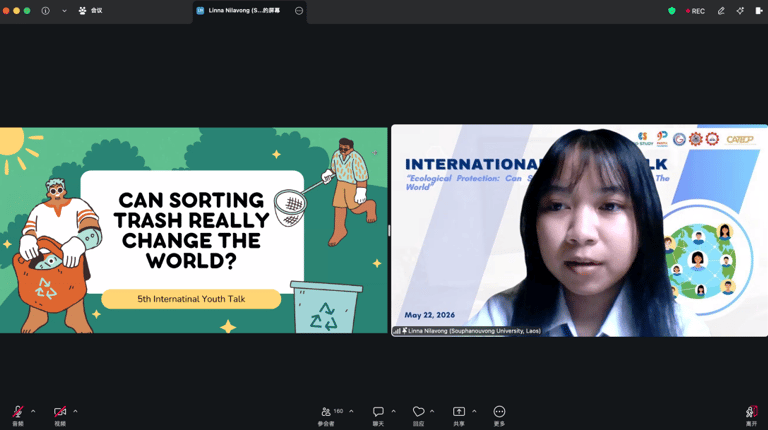
The representative from Sauphanouvong University addressed the global waste crisis, noting that over 2 billion tons of waste are produced annually. She defined trash sorting as the essential process of separating waste into recyclable, organic, general, and hazardous categories rather than mixing them. This practice offers significant environmental benefits, including reduced pollution, the conservation of natural resources like trees, and the protection of marine life from plastic pollution. The team highlighted global success stories such as Japan’s strict rules, Germany’s high recycling rates, and South Korea’s food-to-energy programs. Despite challenges like high system costs and incorrect sorting habits, the presentation urged personal responsibility through the use of reusable items and proper home sorting. They concluded that while sorting won't change the world overnight, it is a vital step toward a sustainable future.