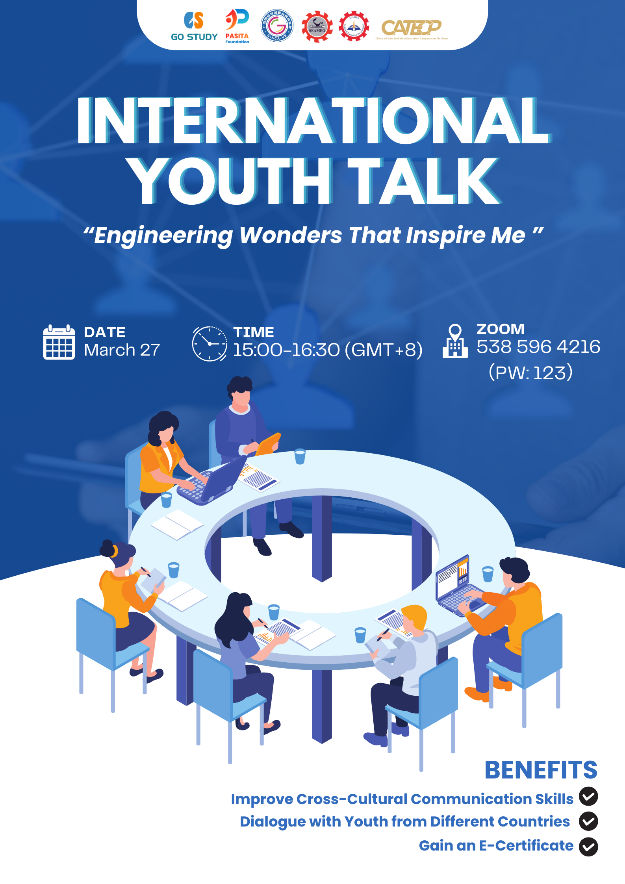
International Youth Talk | Engineering Wonders That Inspire Me
Pasita
3/31/20264 min read
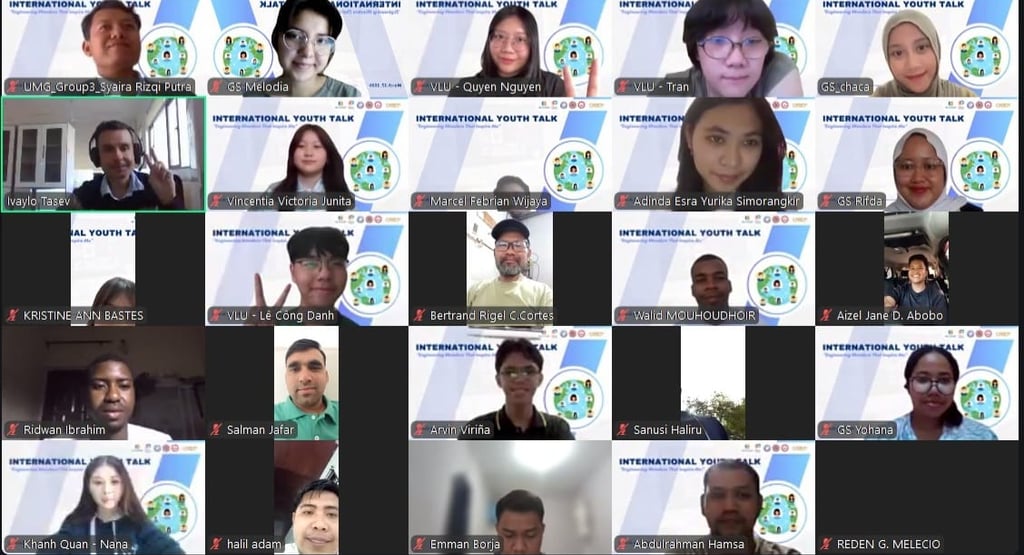
On Friday afternoon of March 27th, the 14th session of the “International Youth Talk” was successfully held online. The session attended by 87 participants, comprising of 30 females and 57 males. This event jointly organized by the Southeast Asian Ministers of Education Organization Regional Centre for Technical Education Development (SEAMEO TED), the China-ASEAN Technical Education Cooperation Platform (CATECP), with the support from The Southeast Asia Youth Sustainable Development Foundation (PASITA) and Go Study Global Education.
The event featured online presentations by youth representatives from universities across Vietnam and Indonesia. Centered around the theme of “Engineering Wonders That Inspire Me,” the event highlighted the fresh global perspectives of young participants, inspiring creative dialogue and deeper cross-cultural engagement.
01 Opening Remarks
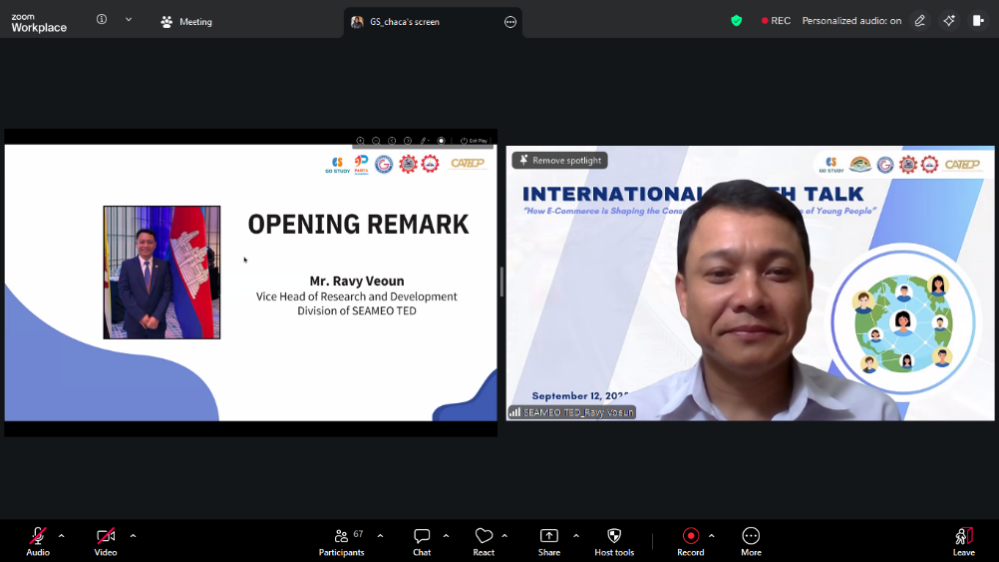
The opening remarks were delivered by Mr. Ravy Veoun, Vice Head of Research and Development Division of SEAMEO TED. He emphasized that the event was held to celebrate innovation, imagination, and the transformative power of engineering in shaping the future. He highlighted that in today’s era, ideas have the potential to change the world, and engineering plays a crucial role in turning those ideas into structures and systems that solve real-world problems, build sustainable communities, and create opportunities that improve people’s lives. He also mentioned that youth are at the heart of this transformation, as the younger generation brings fresh perspectives, creativity, and the courage to explore new possibilities. Therefore, the Youth Talk was not only intended as a discussion forum, but also as a platform for connection, where young people from different cultures could share perspectives, inspire one another, and be encouraged to think bigger and smarter about the future.
02 Presentation Highlights
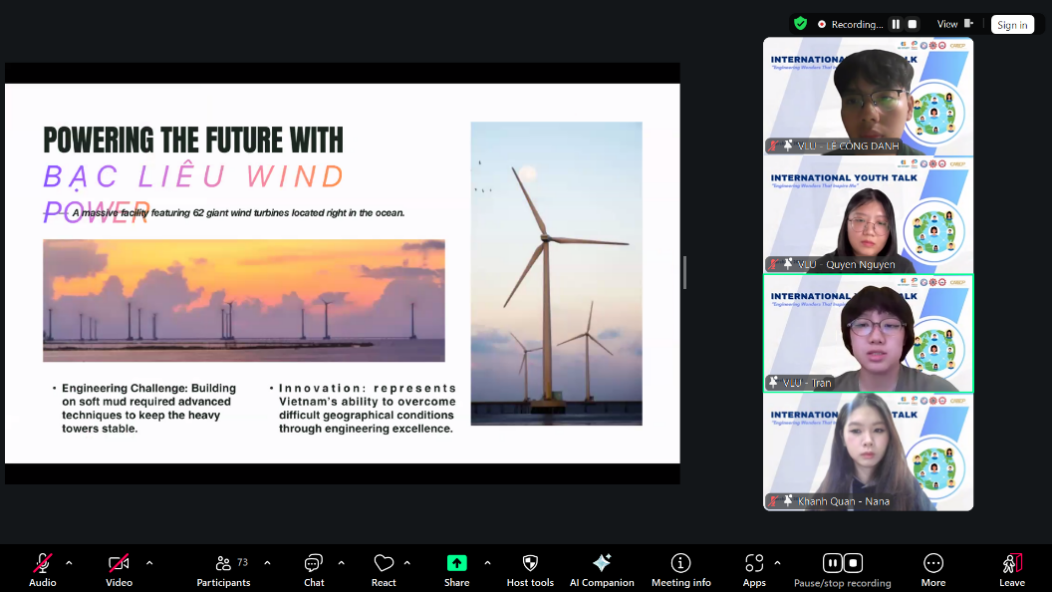
The representative team from Van Lang University, Vietnam explained that the engineering wonders that inspire them are innovations that solve real-life challenges in Vietnam. They highlighted the development of Metro Line No.1 in Ho Chi Minh City, which helps reduce traffic congestion, save time, and improve urban mobility. The team also discussed how the high number of gasoline motorbikes contributes to serious air pollution, encouraging engineers to develop electric mobility solutions such as electric cars and scooters. Additionally, they presented the “Bạc Liêu Wind Power” project as an inspiring example of renewable energy engineering that overcomes difficult geographical conditions while supporting Vietnam’s transition to a cleaner and more sustainable future.
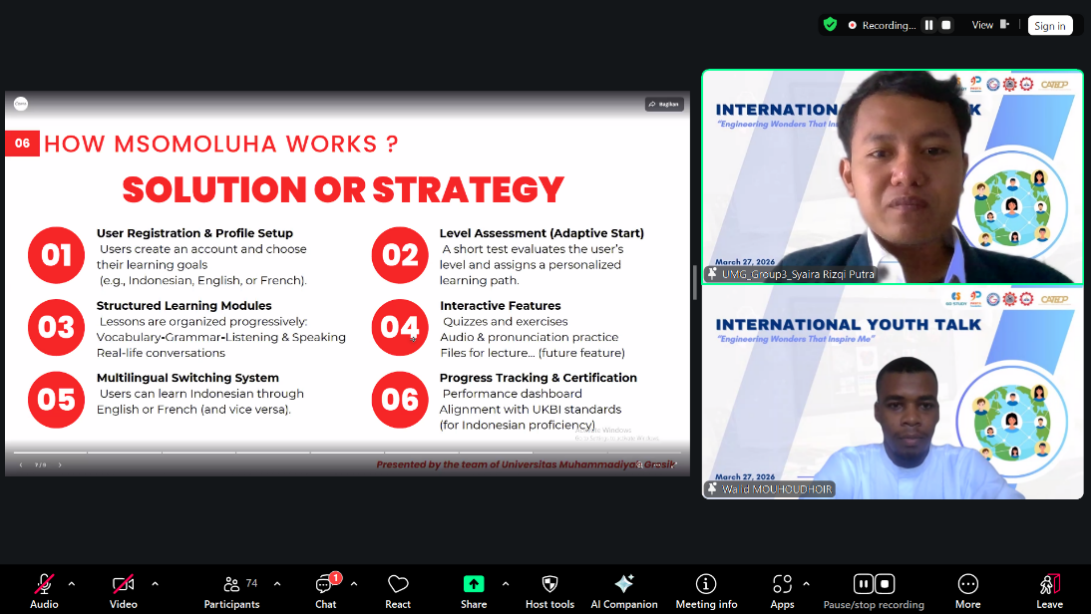
The representative team from Universitas Muhammadiyah Gresik, Indonesia presented “MSOMOLUHA,” a digital language-learning platform designed to bridge language, culture, and opportunities for international students. They highlighted that many French-speaking students studying abroad still face language barriers that affect communication, cultural adaptation, and access to opportunities. To address this, MSOMOLUHA provides interactive learning features such as vocabulary flashcards, quizzes, games, audio-visual lessons, and progress tracking to support multilingual learning. The team concluded that engineering innovation can also build connections between cultures by using technology to make language learning more accessible.
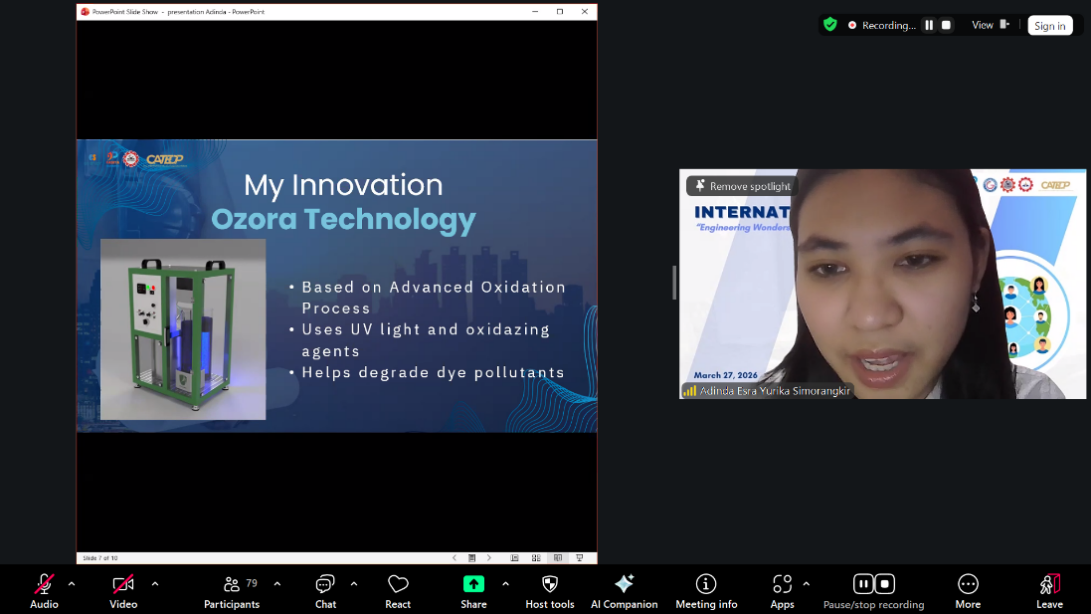
The representative team from Politeknik Negeri Samarinda, Indonesia explained that engineering wonders can begin from simple ideas and curiosity, even within a classroom or student project. They highlighted environmental pollution and industrial waste as major challenges that encourage engineers to develop sustainable technologies. The speaker also presented “Ozora Technology,” an innovation based on an Advanced Oxidation Process that uses UV light and oxidizing agents to help degrade dye pollutants and reduce environmental contamination. Additionally, the speaker shared her innovation journey as a chemical engineering student, explaining how a small idea developed on campus eventually reached the international stage when she presented it in Malaysia, showing that young engineers can create meaningful solutions through curiosity and collaboration.
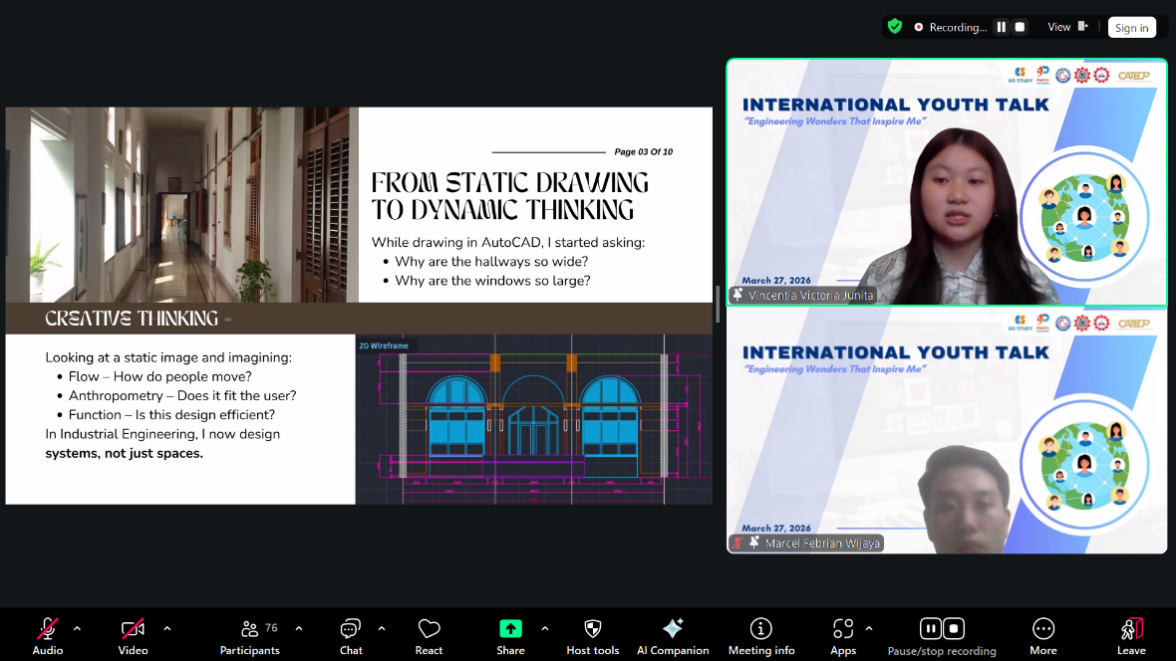
The representative team from the University of Surabaya explained how engineering thinking can evolve from simple observations in design to advanced technological applications. They introduced the concept of ergonomics, emphasizing that effective design must fit human bodies and user needs, illustrated through examples such as differences in door height based on human anthropometry. The speakers also discussed how tools like AutoCAD help engineers create precise floor plans, visualize spatial relationships, and improve efficiency in design processes. Additionally, they highlighted the potential of machine learning in engineering, explaining how it can support applications such as quality control, demand forecasting, and fatigue prediction in ergonomic workstations. Through their presentation, the speakers emphasized that future engineers must think efficiently, creatively, and use technology to design systems that make future work easier.