
International Youth Talk:Sustainable Architecture—How We Can Protect the Environment with Buidings
Blog post description.123
1/5/20262 min read
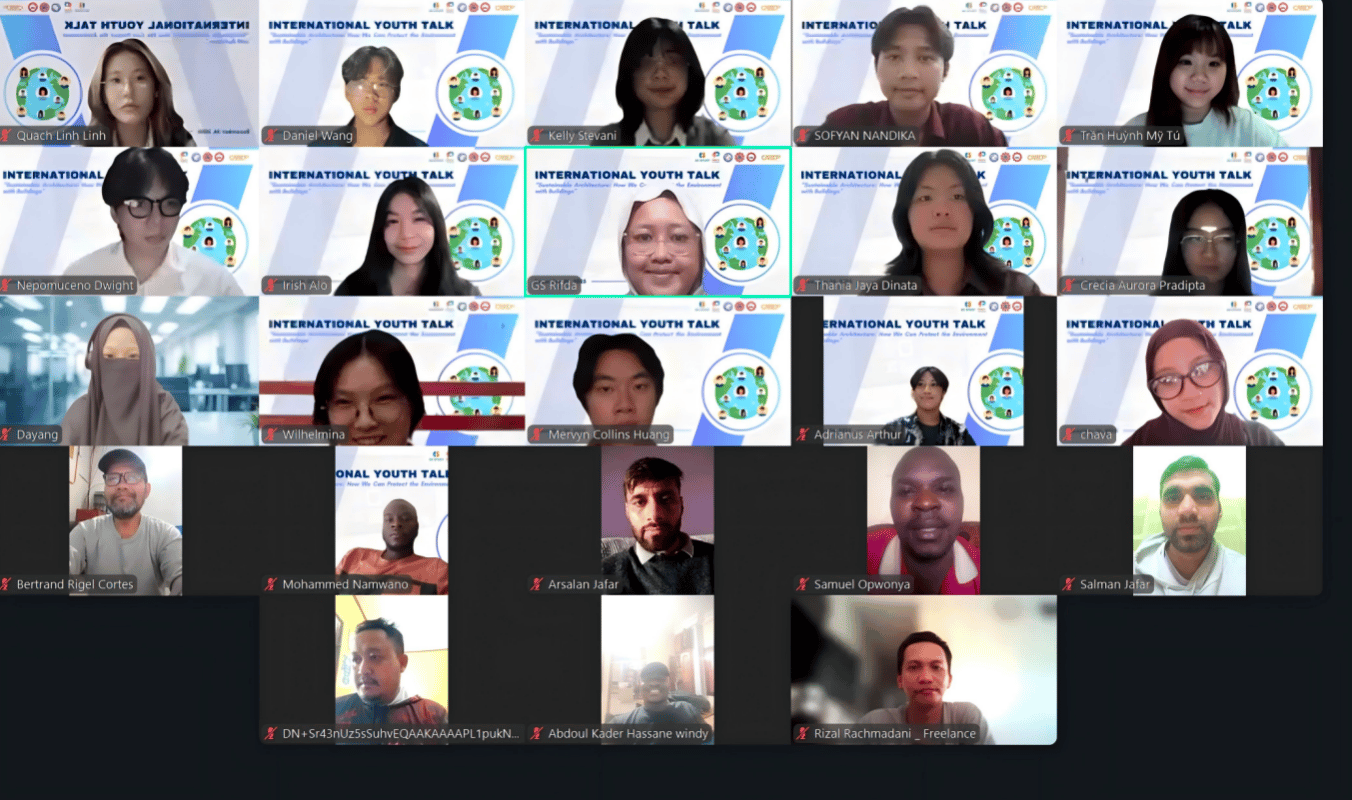
On the afternoon of December 26, 2025, the 11th session of the “International Youth Talk,” jointly organized by the Southeast Asian Ministers of Education Organization Regional Centre for Technical Education Development (SEAMEO TED), the China-ASEAN Technical Education Cooperation Platform (CATECP), with support from PASITA, was successfully concluded online.
The events featured online presentations by youth representatives from universities across multiple countries including Indonesia, Vietnam, and the Philippines. Centered around the theme of “Sustainable Architecture: How We Can Protect the Environment with Buidings”, the youth showcased fresh perspectives with a global vision, sparking creative and cross-cultural exchanges.
01 Opening Remarks
The opening remarks were given by Mr. Tim Vorn, Head of the Research and Development Division from SEAMEO TED. He emphasized three key aspects for youth: adopting eco-friendly materials and evaluating carbon footprints, adapting architectural designs to regional climates and resources, and mastering emerging technical skills such as robotics and energy modeling. He encouraged participants to use these insights to prepare for future careers in sustainable architecture and officially declared the session open
02 Presentation Highlights
Team 1 representatives from Universitas International Batam(UIB) presented youth-led perspectives on Ecological Architecture as an Integrated System for Environmental Protection, focusing on the benefits and implications of ecological architecture for the environment. The students emphasized architecture as an integrated system that should coexist harmoniously with nature rather than dominate it. Their discussion highlighted key issues such as environmental protection, human well-being, and the growing responsibility of architects to respond to climate and ecological challenges. The presentation clearly underlined the importance of thoughtful planning, responsible material selection, and sustainable building management as practical strategies to reduce environmental impact and support long-term sustainability.
Team 2 representatives from UIB focused on Practical Green Design Strategies for Sustainable Urban Buildings, effectively translating sustainability concepts into tangible design solutions, including solar energy integration, green roof systems, vertical gardens, natural ventilation, and rainwater harvesting. Their presentation highlighted how these strategies not only reduce energy consumption and environmental impact but also improve building performance and user comfort. By showcasing real-world case examples, they demonstrated that sustainable design is achievable and adaptable, particularly in dense urban contexts. The presentation offered valuable insights into how green design principles can be realistically implemented and scaled to support environmentally responsible urban development.
The speakers from UPN Veteran Jawa Timur introduced “The Agile Modular Pavilion” as an innovative response to urban density and environmental waste, under the theme of Modular and Circular Architecture for Adaptive Urban Public Spaces. The project addressed issues of urban rigidity by proposing a flexible, modular pavilion system designed for circular cities. The presentation highlighted how the use of standardized modular units enables reconfiguration, relocation, and reuse, significantly reducing construction waste and avoiding demolition. The team emphasized principles such as Design for Disassembly, material recovery, and energy independence through solar integration. By positioning architecture as adaptable infrastructure rather than permanent objects, the presentation strongly reflected the event’s theme of environmental protection through sustainable and resource-efficient building design.