May 2026 International Perspectives Webinar Series
Pasita
6/5/20263 min read
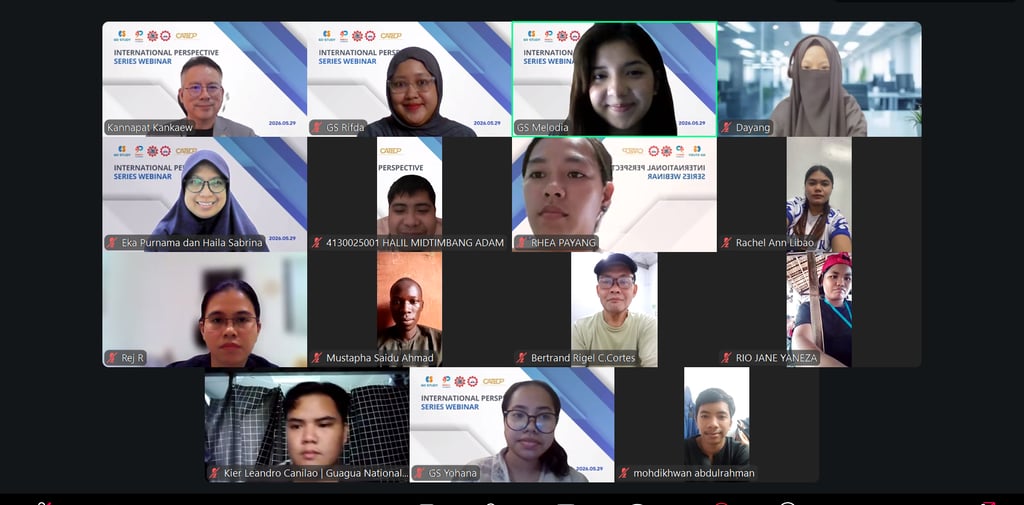
The May sessions of The International Perspectives Webinar Series were successfully conducted. The event was co-organized by the China–ASEAN Technology Education Cooperation Platform (CATECP), the SEAMEO Regional Centre for Technical Education Development (SEAMEO TED), with support from PASITA. This month’s webinars took place on May 15 and 29, 2026, featuring senior experts from Universitas Sumatera Utara and Burapha University International College.
Webinar 1
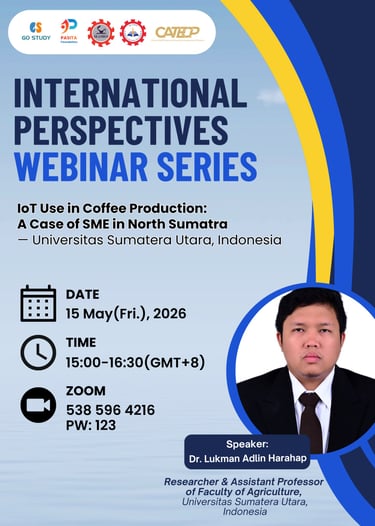
Topic: IoT Use in Coffee Production: A Case of SME in North Sumatra
Speaker: Dr. Lukman Adlin Harahap, Researcher and Professor of the Faculty of Agriculture at Universitas Sumatera Utara
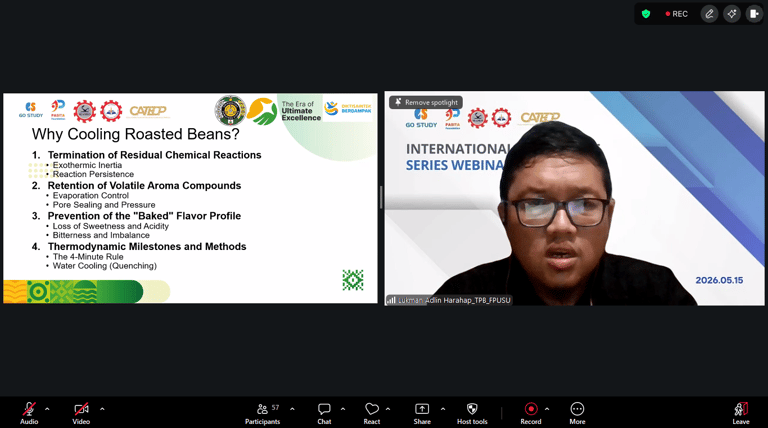
Dr. Lukman explained that the presentation focused on the use of Internet of Things (IoT) and automated control systems in coffee production for SMEs in North Sumatra. He first described the important role of North Sumatra in Indonesia’s coffee industry, especially as a producer of specialty Arabica coffees such as Mandailing and Lintong. He explained that although Indonesia has strong export potential and internationally recognized coffee products, the industry still faces many challenges including stagnant production, low productivity, aging plantations, limited resources among smallholder farmers, and environmental threats such as climate change and coffee leaf rust disease. However, he also highlighted several opportunities for growth, including increasing coffee exports, government support for modernization, scientific developments, and the growing global demand for specialty coffee. Furthermore, he discussed the importance of the roasting and cooling processes in determining coffee quality. He explained that roasting involves various chemical and temperature changes that transform green coffee beans into flavorful roasted beans, while proper cooling is necessary to preserve aroma, maintain consistency, and prevent unwanted flavors. In addition, he introduced the role of control systems in automation by explaining how sensors, actuators, and microcontrollers work together to create a more efficient and consistent coffee production process with minimal human intervention. He then presented his research on a microcontroller-based automated temperature control system for coffee roasting machines using ESP32 microcontrollers, temperature sensors, burners, and LCD displays. Lastly, he discussed another study on an automated cooling system for roasted coffee beans which used sensors, blowers, and microcontrollers to regulate the cooling process automatically. He concluded that IoT-based automation systems have strong potential to improve efficiency, consistency, and process control in coffee production, while future research should focus on improving temperature stability and speeding up the cooling process.
Webinar 2
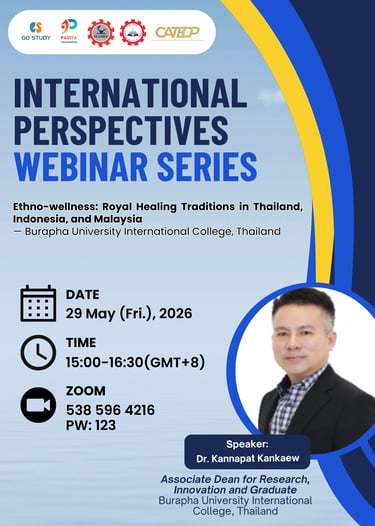
Topic: Ethno-wellness: Royal Healing Traditions in Thailand, Indonesia, and Malaysia
Speaker:Dr. Kannapat Kankaew, Associate Dean for Research, Innovation and Graduate at Burapha University International College
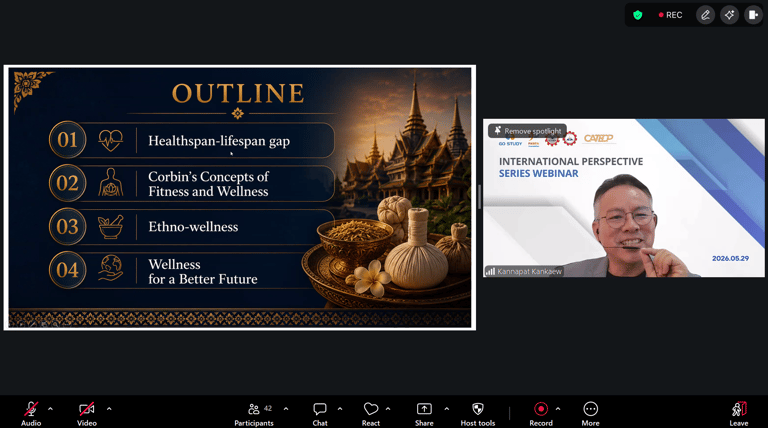
In his presentation, Dr. Kannapat discussed the topic of royal healing traditions in three South-East Asian countries such as Thailand, Indonesia, and Malaysia. He started the discussion by firstly explaining about the ecosystem of wellness. This foundation focuses on closing the global "healthspan-lifespan gap," a critical metric where years lived with chronic disease are projected to rise by 22% by the year 2100. In order to combat this expanding risk, he emphasized Corbin's concepts of fitness and wellness, advocating for a proactive paradigm shift from reactive sick-care to preventive healthcare and multidimensional lifestyle optimization. Later on, the presentation then transitioned into ethno-wellness, demonstrating how traditional cultural heritage serves as a powerful differentiator in a $6.3 trillion global wellness economy. Dr. Kannapat introduced the Perceived Value Model, proving that a documented connection to royal or ethnic lineage acts as a "heritage multiplier" that directly heightens customer value evaluation, satisfaction, and long-term return intentions. To illustrate this, he contrasted three distinct country models. In the case of Thailand, the country utilizes an Open Institutionalization Model, seamlessly blending strict royal protocols with folk traditions and UNESCO recognition, yielding the highest value perception (87.6% variance) and a 78% revisit rate. Indonesia operates on a Palace Secrecy Model centered around the Sumedang Palace, where restricting knowledge to the royal courts creates a scarcity premium that successfully justifies luxury pricing. Lastly, Malaysia employs an Indigenous Integration Model, balancing internal angin and urat networks to foster authentic community trust. Ultimately, the presentation concluded that authentic heritage preservation remains the universal engine driving sustainable global competitiveness.